- louise
- 1839 Views
Water-in-Oil Emulsions: Mechanisms, Applications, and Innovations
Water in Oil emulsions (W/O), where water droplets are dispersed in an oil medium, are essential for various industrial and scientific applications. These include food production, cosmetics, pharmaceuticals, and microfluidics. Thus, understanding the formation and behavior of these emulsions is critical for ensuring product stability, texture, and performance1.
This guide explores the science behind Water-in-Oil (W/O) emulsions, their distinctions from Oil-in-Water (O/W) systems, and the role of emulsification processes in creating stable, functional emulsions. If you want to discover an example of Oil-in-Water Generation, please check this High-Resolution Microfluidic Device for Precise Oil-in-Water Emulsion and Coalescence Analysis.
Oil-in-Water vs. Water-in-Oil Emulsions
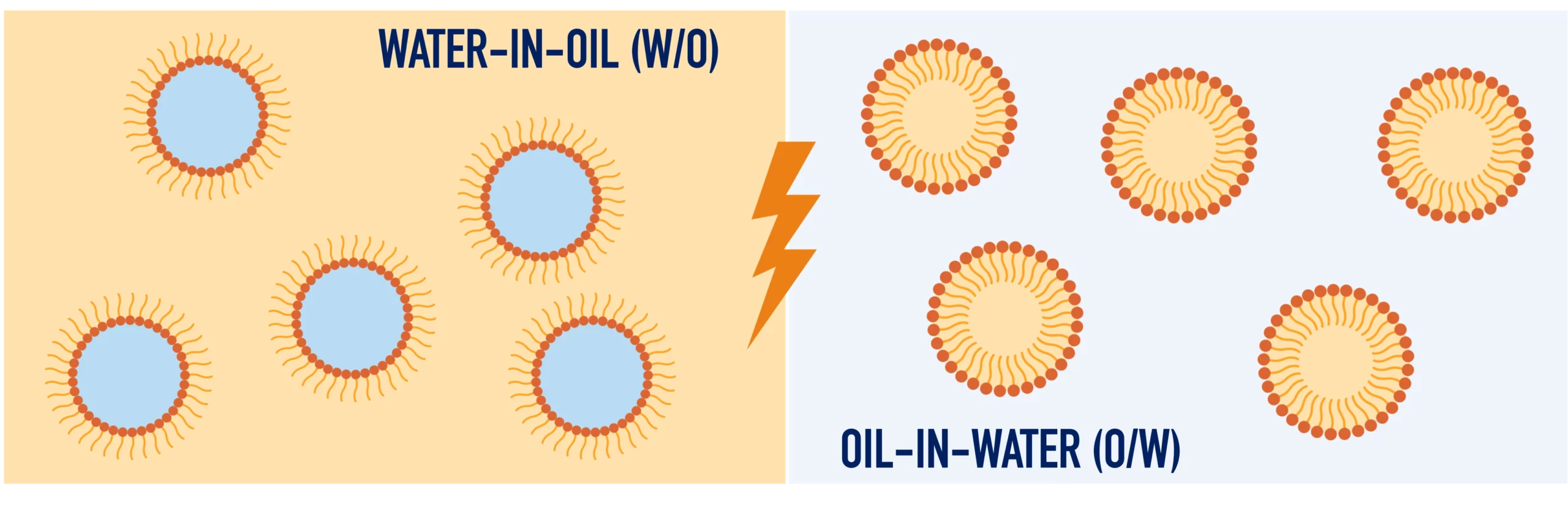
The key difference between Oil-in-Water (O/W) and Water-in-Oil (W/O) emulsions lies in the continuous phase:
- Oil-in-water emulsions (O/W): Oil droplets are dispersed within a continuous water phase. Example: mayonnaise.
- Water-in-oil emulsions (W/O): Water droplets are dispersed in a continuous oil phase. Example: butter.
For example, in the pharmaceutical industry, water-in-oil emulsions are frequently used for topical creams and ointments, allowing for controlled release of active ingredients. In food science, they contribute to the texture and stability of products like margarine and spreads. Hence, understanding which type of emulsion you need is essential for product formulation.
How Does Emulsification Work?
Emulsification is the process of mixing immiscible liquids, like oil and water, into a stable mixture. This is achieved through emulsifiers, which:
- Lower surface tension between the two phases.
- Stabilize droplets, preventing coalescence.
In water-in-oil and oil-in-water emulsions, the role of emulsifiers is crucial. For example, in a water-in-oil emulsion, the emulsifier helps to stabilize water droplets within the oil phase by forming a protective layer around the droplets2. Without this stabilization, the droplets would merge, causing the emulsion to separate. Different types of emulsifiers are used depending on the type of emulsion required (see Hydrophilic-Lipophilic Balance: HLB value), and factors like droplet size, stability, and interaction with other components play significant roles in determining the final product’s behavior.
A common method to enhance emulsion stability is through microfluidics, which allows for precise emulsification and uniform droplet formation. This level of control is essential for maintaining consistency in both research and industrial applications. At Elveflow, our Easy Droplet Generation Pack offers the precise control needed to optimize emulsion formation in microfluidic systems.
Droplet generation Pack
Industrial Emulsion Process
In industrial settings, the emulsification process involves the mixing of two immiscible liquids, typically oil and water, to create stable emulsions. This is achieved through high-energy mechanical methods such as high-shear mixers, ultrasonic emulsifiers, or homogenizers, which break up the dispersed phase into fine droplets. Emulsifiers, such as surfactants, are added to stabilize the droplets and prevent coalescence. The industrial process is crucial for producing consistent, large-scale emulsions used in various sectors, including food, pharmaceuticals, and cosmetics. Advanced techniques like microfluidics are increasingly being adopted in industrial applications, offering precise control over droplet size and distribution, which enhances product stability, quality, and efficiency.
Applications of Water-in-Oil Emulsions in Industry
Water-in-Oil Emulsion Food Examples
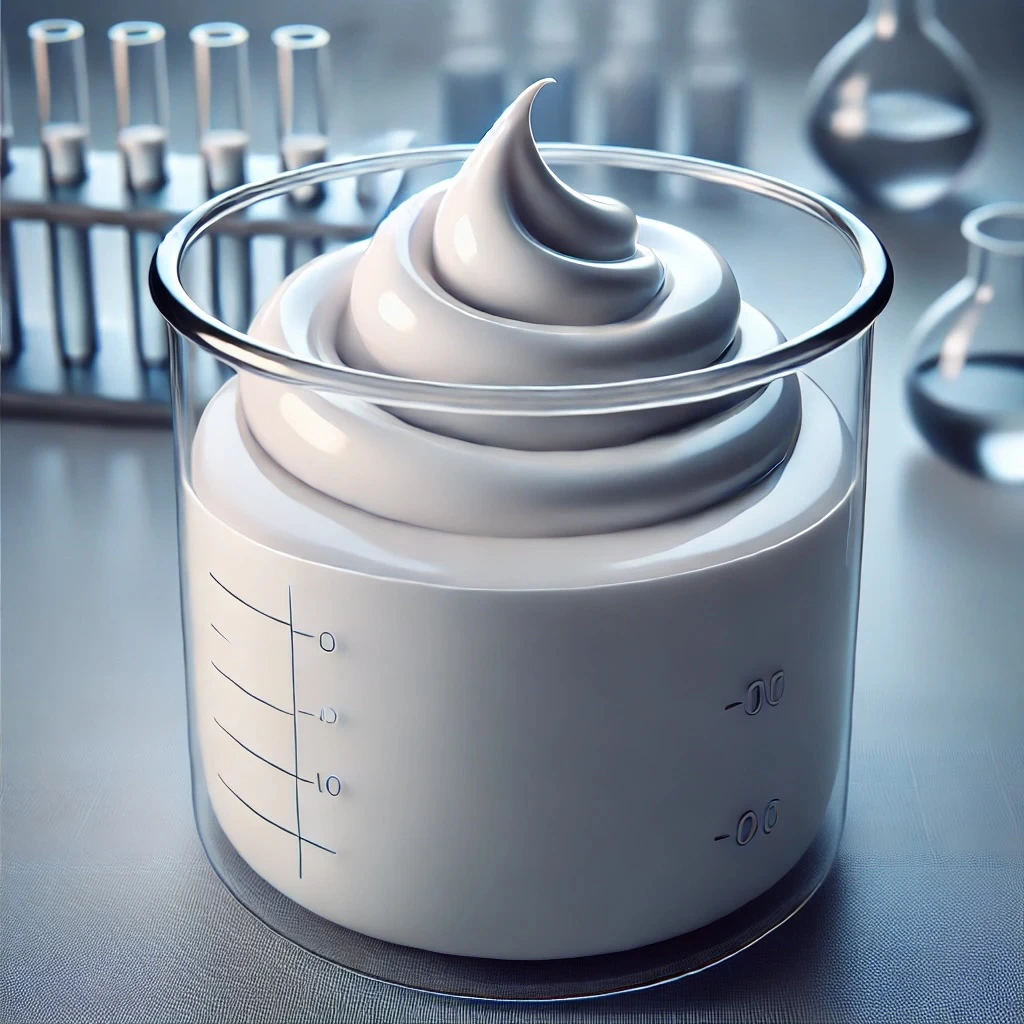
In the food industry, water-in-oil emulsions are found in products like:
- Butter and margarine: Water droplets dispersed in an oil phase contribute to texture and shelf stability.
- Processed cheese: Emulsions improve spreadability and product consistency over time.
In these products, water droplets are dispersed in a continuous oil phase, giving the product a smooth, spreadable consistency while ensuring shelf-life stability. The structure of these emulsions helps in encapsulating water, limiting microbial growth, and maintaining the desired texture over time. These emulsions also offer controlled flavor release, enhancing the consumer experience.
Water-in-Oil Emulsions in Cosmetics
In the cosmetics industry, water-in-oil emulsions are used in creams and lotions where a rich, hydrating effect is desired. The water droplets suspended in oil help deliver moisture deep into the skin, while the oil phase forms a barrier that locks in hydration. These emulsions are particularly effective in creating products that offer long-lasting moisture without feeling greasy.
Water-in-Oil in Pharmaceutical Applications
Water-in-oil emulsions play a key role in pharmaceuticals, particularly in:
- Topical medications: The oil phase protects the skin, while water droplets deliver active ingredients.
- Skin treatments: This system ensures both protection and active treatment, particularly for skin conditions.
Complex Emulsion Systems: Double emulsions and Microemulsions
Complex emulsion systems, such as double emulsions and microemulsions, offer unique opportunities for advanced formulations in industries ranging from pharmaceuticals to food science. These systems provide controlled delivery, enhanced stability, and encapsulation capabilities, making them essential in cutting-edge applications.
Double emulsion (W/O/W and O/W/O)
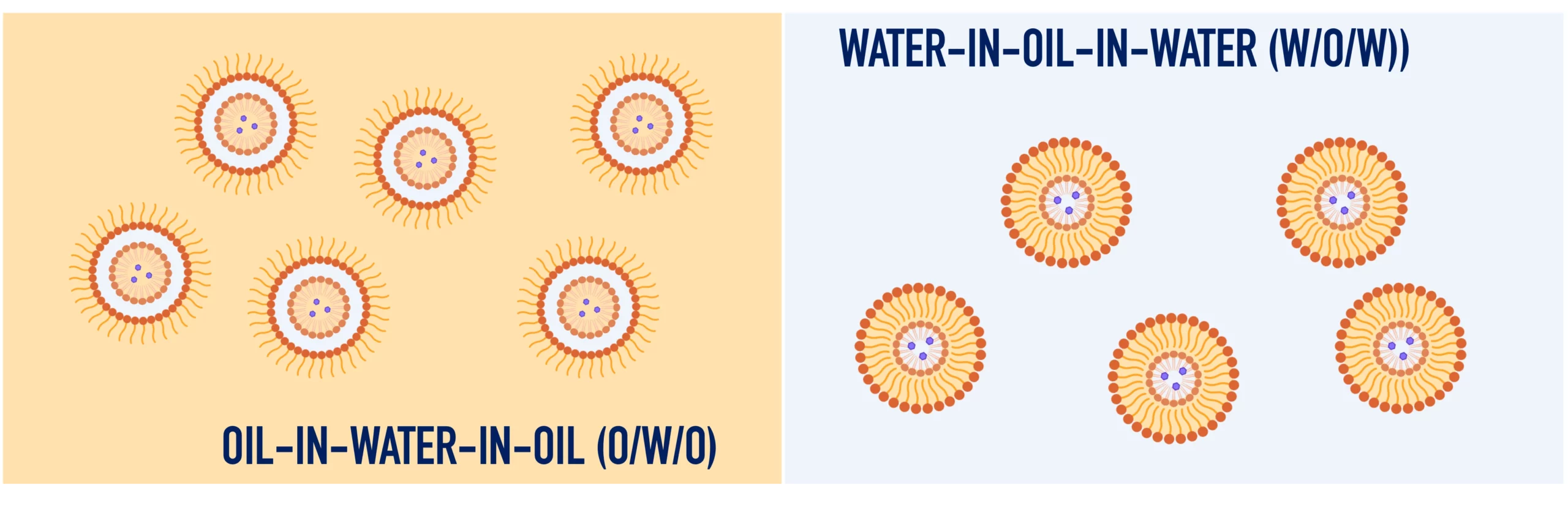
Double emulsions, or emulsions of emulsions, involve droplets containing smaller droplets within them, such as oil-in-water-in-oil (O/W/O) emulsions. These systems offer significant potential in pharmaceuticals for controlled and sustained release of active ingredients, making them ideal for drug delivery applications3.
However, double emulsions are thermodynamically unstable, prone to coalescence, flocculation, and creaming. Large droplets tend to release their contents uncontrollably, posing a challenge for stability during storage.
Recent advancements in this field:
- Polymeric emulsifiers to improve stability.
- Reducing droplet size through refined emulsification methods.
- Enhanced control over release mechanisms using additives via the reverse micellar mechanism.
Microfluidics enables precise control over droplet size and distribution, improving stability and making double emulsions more reliable for drug delivery systems. Discover double emulsion encapsulating liposomes in this detailed application note!
Solid-in-Oil-in-Water Emulsions
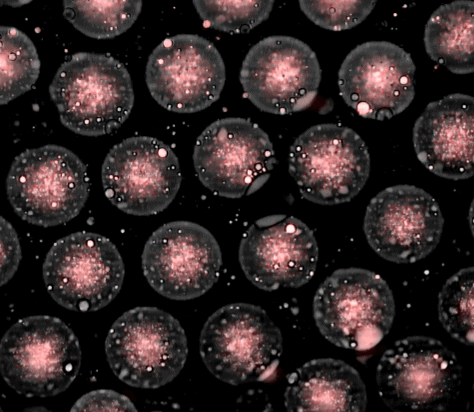
To encapsulate solid particles, the drug can first be dissolved in an oil phase to create a solid-oil dispersion. This mixture is then added to the water phase, forming a second emulsion. Solid-in-oil-in-water (S/O/W) emulsions4 are an innovative system where solid particles are dispersed in oil and subsequently suspended in an external water phase. This type of complex emulsion is particularly valuable for:
- Nanodroplets and drug delivery: The solid particles within the oil phase offer additional stability and protection for sensitive compounds, as highlighted in research on nanomedicine.
- Pharmaceuticals: These emulsions are especially valuable for delivering hydrophobic drugs or bioactive molecules that benefit from encapsulation within the solid-oil phase for extended release.
Microemulsions
Microemulsions are thermodynamically stable mixtures of oil, water, and surfactants that form transparent or translucent solutions5. Unlike traditional emulsions, microemulsions form spontaneously without the need for external energy. These systems are characterized by their nanoscale droplet size, which allows for enhanced solubilization of hydrophobic compounds. Microemulsions are used in diverse fields such as pharmaceuticals, where they improve drug delivery and bioavailability, cosmetics for their ability to enhance skin penetration, and food science, particularly in encapsulating flavors and nutrients. Their stability and ease of formation make them highly versatile for industrial applications.
How Elveflow Supports Your Research and Applications
At Elveflow, we are experts in microfluidics, designed by scientists for scientists. Whether you’re working in food science, cosmetics, or pharmaceuticals, we offer cutting-edge solutions for precise control over water-in-oil emulsions. Our Droplet Generation Pack provides:
- Customizable emulsions with tailored properties for your specific needs.
- Precision pressure control to ensure unmatched stability, uniformity, and optimal droplet size.
With our advanced flow control and fluid management equipment, we empower you to push the boundaries of your research. Contact our experts today for a tailored microfluidic solution designed specifically for your application.
CONCLUSION
Water-in-oil (W/O) emulsions, where water droplets are dispersed within a continuous oil phase, are integral to various industries, including food, cosmetics, pharmaceuticals, and microfluidics. Their unique properties are harnessed to enhance product texture, stability, and performance. The formation of stable W/O emulsions relies on emulsifiers that reduce surface tension and prevent droplet coalescence. Advanced techniques, such as microfluidics, offer precise control over droplet size and distribution, further improving emulsion stability and functionality.
Modular Microfluidic range
Written and reviewed by Louise Fournier, PhD in Chemistry and Biology Interface. For more content about microfluidics, you can have a look here.
References
For more information or Technical discussion

Microfluidics knowledge
Do you want tips on how to best set up your microfluidic experiment? Do you need inspiration or a different angle to take on your specific problem? Well, we probably have an application note just for you, feel free to check them out!

 Job
Job Collaborations
 Customer
 Other
Other