Drug screening
Experimental setup for drug screening with high-performance microfluidic solutions for faster, more precise results.Control concentration, timing, and duration of fluidic delivery parameters
Automatize dynamic drug screening across a broad spectrum of medications
Applicable models for testing with on-device mixing
Features & Benefits
Drug screening is a method used in drug discovery and medical research, as well as biology, material science and chemistry. Using microfluidics gives the opportunity to reduce the size of the test devices, multiply the number of tests and reduce their duration.
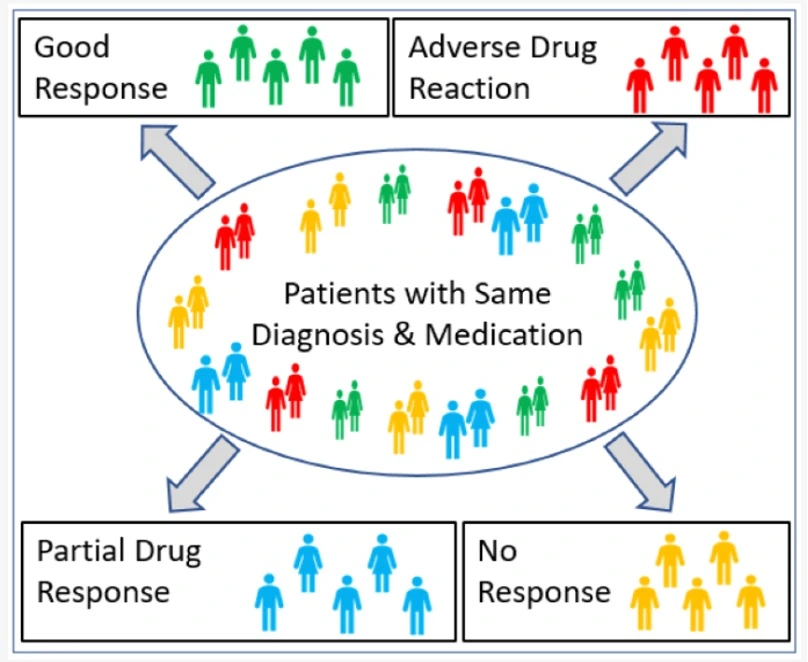
Drug screening allows conducting a high number of chemical, genetic and pharmacological tests, paving the way to personalized medicine.
At Elveflow, we provide all-in-one systems designed to help researchers and scientists accelerate their workflow for efficient and high-throughput drug screening experiments. By making your assays standardized, parallelized and miniaturized, you create a highly reproducible environment perfect to bring your research to the next level.
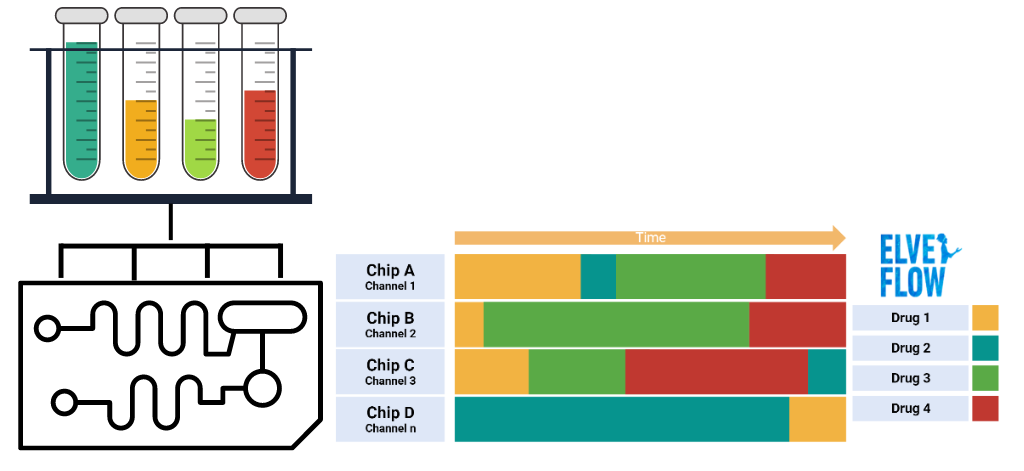
Our comprehensive system enables sequential injection and parallelisation at the same time, perfect for simultaneous screening of multiple drug combinations. With the MUX Cross Chip, you are able to run numerous experiments in parallel, significantly boosting your screening efficiency.
Elveflow’s equipment enables high standards of versatility for your experiments with control over flow rates and mixing ratios, as well as automation capabilities.
Accelerating Clinical Trials & Reducing Costs
Integrating microfluidics into drug screening not only enhances early-stage research but also significantly impacts clinical trial efficiency. By improving assay reproducibility and enabling high-throughput parallel testing, microfluidic-based drug screening reduces the time needed to identify promising candidates, allowing for faster progression to clinical trials. The miniaturization of assays also reduces reagent costs, making the entire drug development pipeline more cost-effective. Additionally, microfluidic models provide physiologically relevant conditions that improve the predictive accuracy of preclinical data, reducing the risk of late-stage failures and further lowering overall research and development expenses.
Applications in Drug Discovery & Development
Microfluidic technology enhances drug screening by enabling real-time analysis, dynamic control over cellular environments, and high-throughput testing across various therapeutic areas:
- Gene therapy – The success of gene therapy depends on the precise delivery and controlled expression of genetic material. Microfluidics allows researchers to study viral and non-viral gene delivery systems in single-cell environments, assess transfection efficiency, and optimize vector formulations to enhance therapeutic outcomes.
- Targeted treatment – The development of targeted therapies, such as small-molecule inhibitors and monoclonal antibodies, requires precise testing of drug-receptor interactions and targeted agent-biomarker interaction. Microfluidic platforms enable real-time screening of drug candidates against specific molecular targets, allowing for rapid assessment of binding affinity, specificity, and downstream cellular effects.
- Immunotherapy – Advancing immunotherapies, such as checkpoint inhibitors and CAR-T cell therapies, requires detailed studies of immune cell behavior. Microfluidic systems provide controlled microenvironments to analyze immune cell activation, cytokine secretion, and tumor-immune interactions, leading to more effective therapeutic strategies.
- Vaccine development – Creating next-generation vaccines demands optimized antigen presentation and immune system activation. Microfluidics facilitates precise control over antigen delivery, adjuvant formulation, and immune cell stimulation, helping researchers evaluate immune response kinetics and identify the most effective vaccine candidates.
Optimizing Biochemical Assays
Beyond drug discovery, microfluidic technology improves the efficiency and reproducibility of key biochemical assays used in pharmaceutical and biomedical research:
- Affinity binding studies – Understanding molecular interactions is crucial for drug discovery. Microfluidic platforms allow for high-resolution, real-time analysis of ligand-receptor interactions, protein binding kinetics, and biomolecular affinity measurements, improving drug candidate selection.
- Cytotoxicity assays – Evaluating a drug’s toxicity is a critical step in preclinical testing. Microfluidic devices enable precise control over drug exposure, allowing for dynamic monitoring of cell viability, apoptosis, and necrosis at single-cell resolution, leading to more reliable cytotoxicity assessments.
- ID50 measurement – Determining the inhibitory concentration of a drug candidate is essential for dosage optimization. Microfluidics provides high-throughput and precise ID50 (inhibitory dose 50) measurements by automating serial dilutions, ensuring accurate potency assessments with minimal sample usage.
- Custom biochemical workflows – Microfluidic platforms can be adapted to automate complex experimental workflows, such as enzyme kinetics studies, biomarker detection, and pharmacokinetics modeling, offering more efficient and reproducible biochemical analysis.
Unlock the Full Potential of Microfluidic Drug Screening
By integrating microfluidics into drug screening workflows, researchers can accelerate drug development, improve data quality, and reduce experimental costs. Whether optimizing therapeutic screening or refining biochemical assays, Elveflow’s microfluidic solutions provide the precision and flexibility needed for cutting-edge pharmaceutical research.
Explore our Pressure Controller OB1 and MUX Cross Chip and discover how it can transform your Drug Screening experiments.
Contact our experts to answer any questions about this system and how it can match your specifications!
More content to read:

We provide a full set of instruments to quickly and efficiently work on drug screening. One of the possible configurations is shown in the following setup:
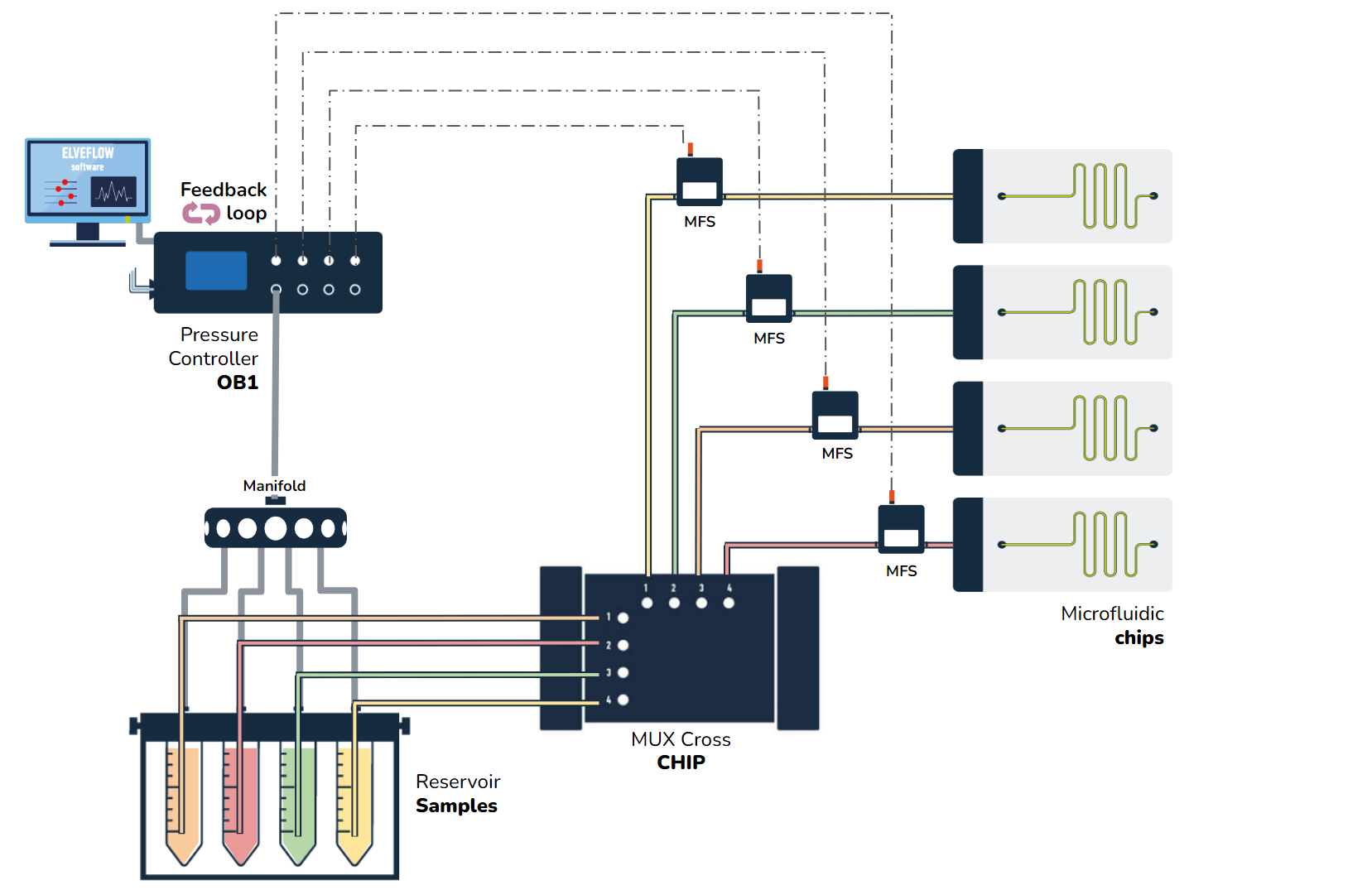
The system includes:
- OB1 Flow Controller
- Microfluidic Flow Sensor
- MUX Cross Chip
- Several pressure-tight reservoirs
- All the necessary fittings to connect to your system
- Microfluidic chip of your choice (We can advise you on that part. Tutorials are also available)
- ESI Software
- Software development tools
- User guides
- Tutorials
Benefits of Elveflow equipment for the experiment
This system offers numerous advantages in the research and industrial sector. It enables greater efficiency and better results since it simulates a friendly microenvironment.
- Perform simultaneous screening of multiple drug combinations with ease. In that way you can be able to run numerous experiments in parallel, significantly boosting your screening efficiency.
- Schedule and monitor your experiments. You can configure and automate your flow parameters, duration and drug combinations effortlessly by using the Elveflow software, its sequencer and intuitive interface.
- Mimic intricate physiological conditions. Using the Elveflow system will allow you to achieve biologically relevant results.
- Optimized automation. The automated features of our suite reduce human error and time so you have what it takes to get consistent information in your drug detection experiments. Save time and streamline your workflow by eliminating the need for additional steps in every assay and eliminating many manual procedures.
Frequently Asked Questions
If you want to sequentially screen more than 4 different drugs, we recommend using our MUX Distribution valve. It can inject sequentially up to 12 different solutions.
For combinatorial screening of more than 4 drugs, we recommend using our set of valves and our controller to adapt the set up to your specific needs. By using our advanced range and its specific valves, you can increase even more the number of valves in your system to 16. This advanced solution is ideal for its versatility and automation capabilities.
Yes, the MUX Cross Chip is compatible with solutions containing suspended particles, unlike the MUX Distribution. Contact our experts for more information.
All kinds of reservoirs are compatible with our OB1 pressure controller. From 800 µL to 350 mL, explore our full range of reservoirs, all compatible with the Elveflow ecosystem and choose the one that fits your needs the best. You don’t find the volume that would correspond to your needs, contact our expert for more information.
The MUX Cross Chip is compatible with our Software Development Kit. Our package allows developers to integrate Elveflow systems into their own control programs. Those libraries enable fast and easy integration of our instruments to your lab project. We provide the following libraries free of charge (with documentation and example codes): C++ library, Python library, MATLAB library, LabVIEW library.


 Job
Job Collaborations
 Customer
 Other
Other