Wearable testing use case
Automated system for precise wearable testingAllows precise manipulation of pressure and flow rate
Test different reagents with our Distribution Valve
Create a reproducible characterization test
Credit : Yu Song et al., (2020). Wireless battery-free wearable sweat sensor powered by human motion. Sci. Adv.6,eaay9842(2020). DOI: 10.1126/sciadv.aay9842
Licence : Public Domain Dedication
Features & Benefits
wearable testing Use Case

what is it?
The wearable testing pack is dedicated to the test, characterization, and calibration with any volumes, reproducibility, and automatization. We have tried to create a multiplexing system that automates testing to calibrate any wearable where fluidics is involved.
The main objective of this pack is to create a system that is scalable and supports proper calibration through the use of a microfluidic system and biological fluids to easily calibrate your wearable. In addition, this system can be adapted to test both liquids and gas.
AN ALL-IN-ONE PACK TO EASILY TEST YOUR wearable device
Wearables are devices that usually have integrated sensors that allow them to collect and process data. For example a patch for sweat analysis. This data can be biological and related to physical activity, health, communication and other aspects of daily life. Furthermore, these devices have a wide variety of applications and can be adjusted to different sensitivity and accuracy criteria.
wHY USE MICROFLUIDICS FOR wearable TESTING?
Currently, there are methods that allow the testing of wearables. However, these require the use of many materials and long and repetitive processes that need extensive manual operations, often done by the scientist that developed the wearable. These methods are often static and do not replicate accurately the physiology of the body. Therefore, if you want to ensure high control and calibration of your tests, you can take your experiments to the next level with the advantages offered by microfluidics.
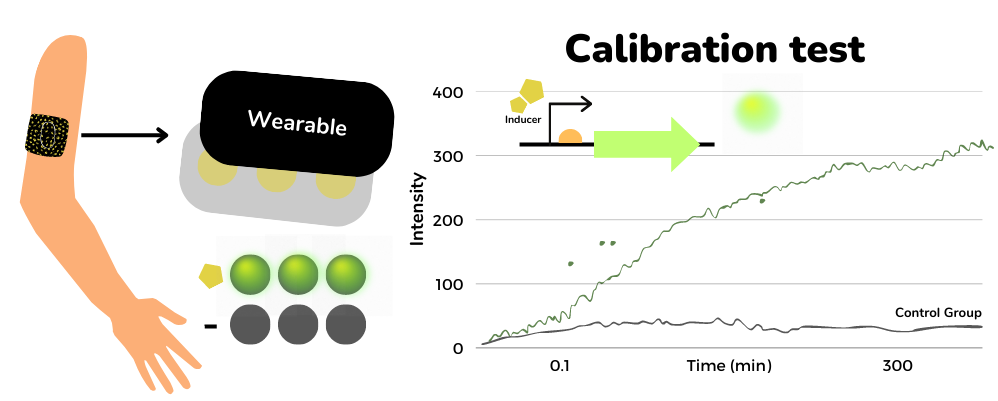
In general, microfluidics outperforms conventional wearable testing methods in the field of realism, flow control, miniaturization, multiplexing, automation and efficiency. Therefore, because microfluidics provides a powerful and versatile platform for wearable testing, it will provide researchers and manufacturers with valuable insights into device performance, reliability, and functionality under conditions that closely mimic real-world usage scenarios.

KEY ADVANTAGES:
- Microfluidic systems can replicate physiological conditions for more accurate testing of wearables.
- Microfluidic devices enable precise control of fluid to ensure a appropriate wearable performance.
- Microfluidic systems allow proper integration with other analytical technologies.
- Microfluidics enables increased efficiency and throughput through parallel processing (multiplexing) of multiple samples or tests in wearable assays.
- Microfluidic platforms can provide precise control of sample volumes, improve mixing and reaction kinetics, and enable sensitive detection methods, resulting in more robust and accurate testing of wearable devices.
Overview of the wearable setup
How to choose the better configuration of the pack?
Here is an example of what your system could look like but there are multiple possibilities depending on if your medical device uses a single inlet or multiple and the type of tests that you need to perform.
SETUP AND CONTENT:

This wearable testing pack is based on calibration by injecting different types of samples using a sequential injection system. For more detailed information, please contact our experts.
MODEL of the setup:
We take care of the fluidic design, you take care of your science. We provide all the instruments to automate your fluidic setup. One of the possible configurations is a sequence of different analytes as shown in the following setup:
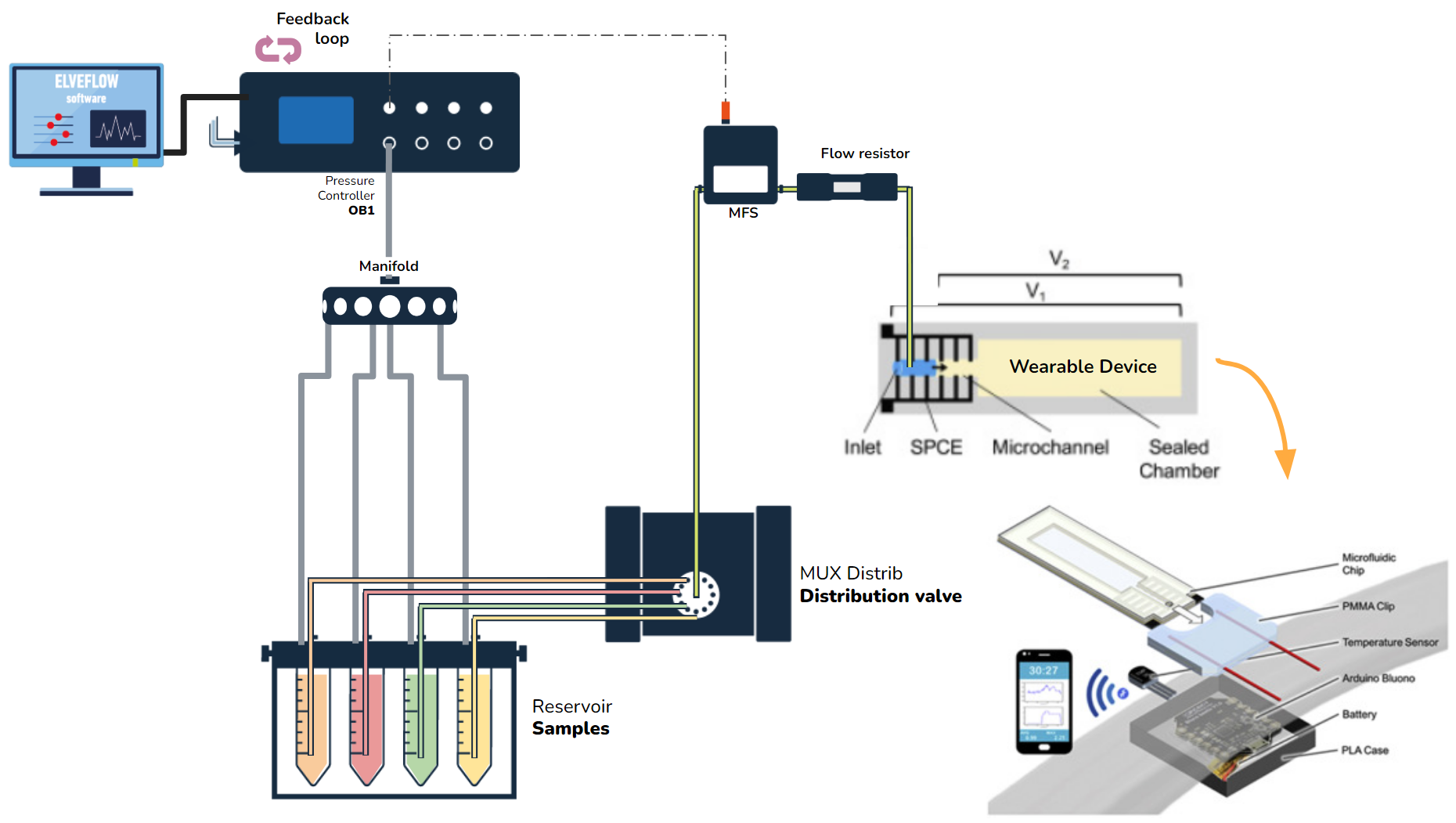
With our beta package you can test different substances in your wearable. However, if you then wish to vary the concentration, you can consult our other beta pack for concentration calibration.
Most packs use the following instruments:
Hardware:
- One OB1 flow controller DUAL
- Flow sensor MFS (see also the BFS-Coriolis flow sensor for the best performance)
- Rotative distribution valve (MUX distributor)
- Mux Wire
- Reservoirs
- Kit starter pack Luer Lock with fittings and tubing
- ESI control software (automated sequences possible)
Contact our experts to answer any questions about this wearable testing use case and how it can match your specifications!
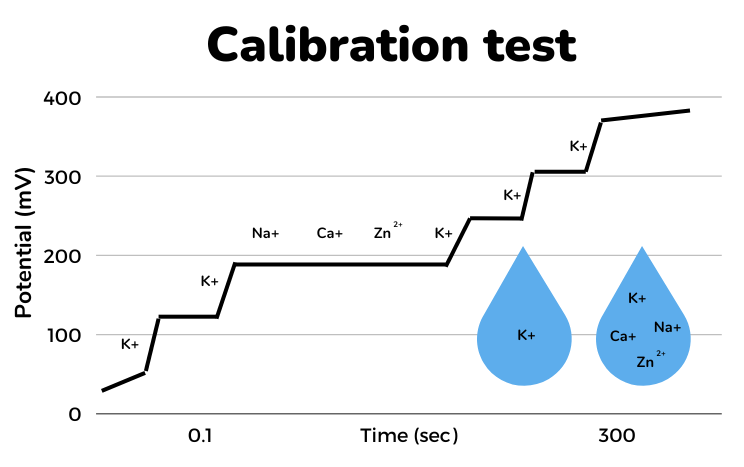
Calibration curve:
You can use this pack for adjusting the concentration ratio of analytes or switch from different samples, this will allow you to perform a steps or continuum analysis.


 Job
Job Collaborations
 Customer
 Other
Other