Microfluidics application note
Published on 27 May 2023
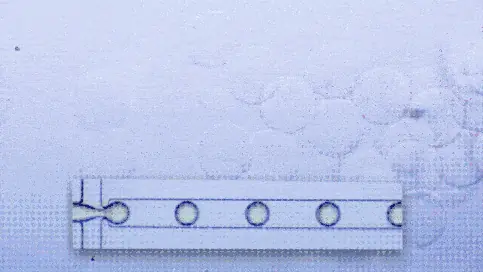
Introduction to alginate beads production
Hydrogel-based delivery systems are finding more and more applications, from encapsulation, protection, to the release of bioactive agents in many fields such as pharmaceutical, supplements, food industries, for cell/bacteria/microbes culture & implantation, and cell-based genes in biological research.
Advantages of using alginate beads
Hydrogel beads fabricated from biopolymers are particularly suitable for the encapsulation of biological thanks to their biocompability and because they often involve mild preparation conditions that do not alter biological properties.
Amongst those, anionic polysaccharide alginate beads offer particular advantages as they can be easily formed or degraded, and also provide a non-toxic microenvironment (cellular/microbial growth) and are highly affordable.
Generally, alginate microgels are prepared by either the external diffusion or internal release of a crosslinking agent into or among dispersed aqueous alginate droplets.
In addition, the size and shape of the beads are often critically controlled, since for many uses the beads have to be monodisperse in size and spherical in shape.
Many applications can be performed using alginates, such as:
Batch method for alginate beads production
A common method to generate alginate beads is by extruding an alginate mixture into a calcium solution. However, this method has major limitations as the generated beads are very large in size (>500µm), are non-spherical and have a very poor reproducibility.
Alginate beads production using microfluidics
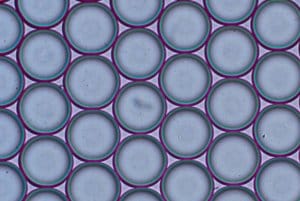
This application note will show you how highly monodispersed alginate beads can be easily generated by microfluidics droplet generation, following the consecutive steps:
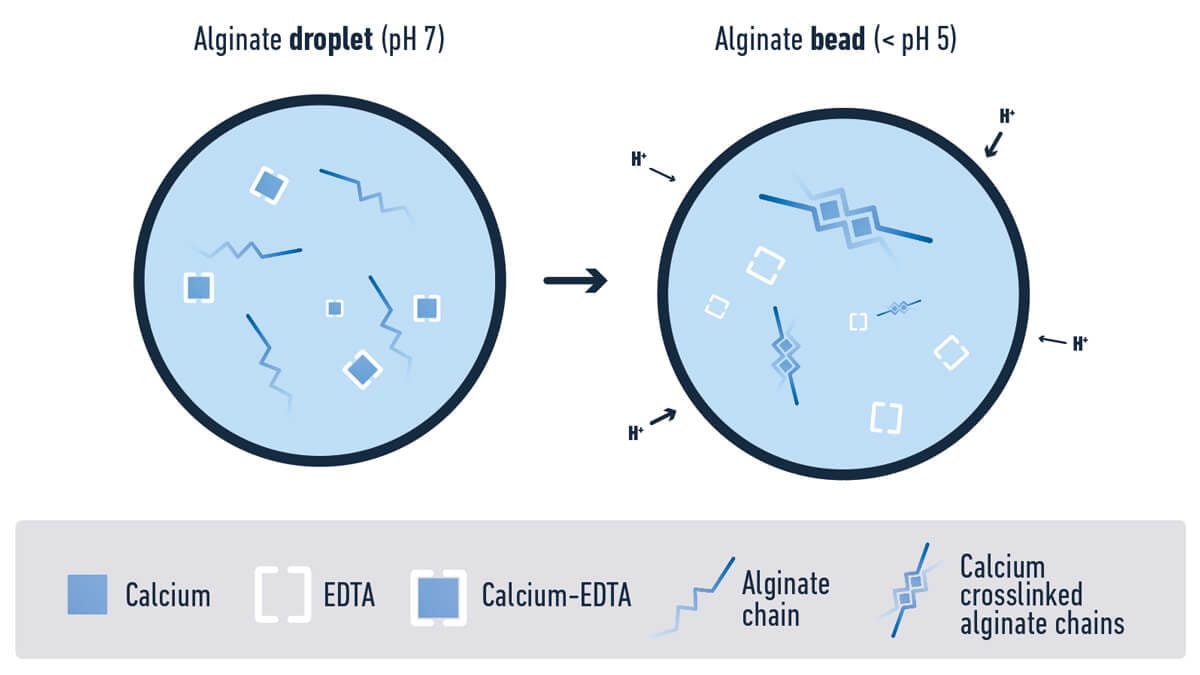
We will first start by preparing an Alginate/EDTA-Calcium solution. Then microdroplets of this solution will be generated using a microfluidic system. Finally, a calcium compound will be released into the droplet by a pH modifying agent (Acetic acid), and will crosslink with the alginate to generate Ca-Alginate beads. Several experimental conditions have been tested to achieve highly monodispersed droplet with sizes within the 50µm range. Other beads size are achievable with a similar setup.
If you want to know more, feel free to contact our team of experts!
Alginate beads production: list of components
Tip: everything you need is included in our alginate bead generation pack


- 2x flow sensors MFS2 0/7 µL/min

- Kit starter pack Luer Lock + 1/32 tubings + 1/32 sleeves + 23G needles

- 2x 15 mL Falcon
Alginate beads production: materials
Hardware:
- OB1 flow controller with at least two channels 0/2000 mbar
- 2x flow sensors MFS2 0/7 µL/min
- Kit starter pack Luer Lock + 1/32 tubings + 1/32 sleeves + 23G needles
- 2x 15 mL Falcon
- Microfluidic chip (hydrophobic channels)
- Microscope for observation (optional)
- Fast camera to register droplets (optional)
Chemicals:
- Alginate (low viscosity)
- Calcium-EDTA
- Acetic acid
- HFE7500 oil with 2% surfactant
- Droplet breaking solution
Alginate beads production: Step by step method
Step 1: Solutions preparation
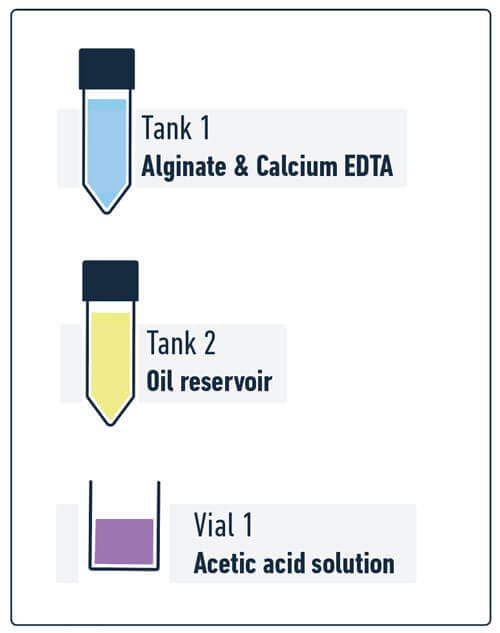
Tank 1: Alginate & Calcium EDTA
Mix 2% w/w alginate/water solution and add 0.5M Calcium-EDTA into the mix.
Vial 1: Acetic acid solution
Prepare Acetic acid solution. Depending on needed gelation time use up to 2% acetic acid for immediate gelation and below 0.2% for slow gelation (not recommended to use below 0.05%).
Step 2: Generation of Alginate/EDTA-Calcium droplets
Microfluidic setup used to generate highly monodispersed droplet with size in the 50 µm range.
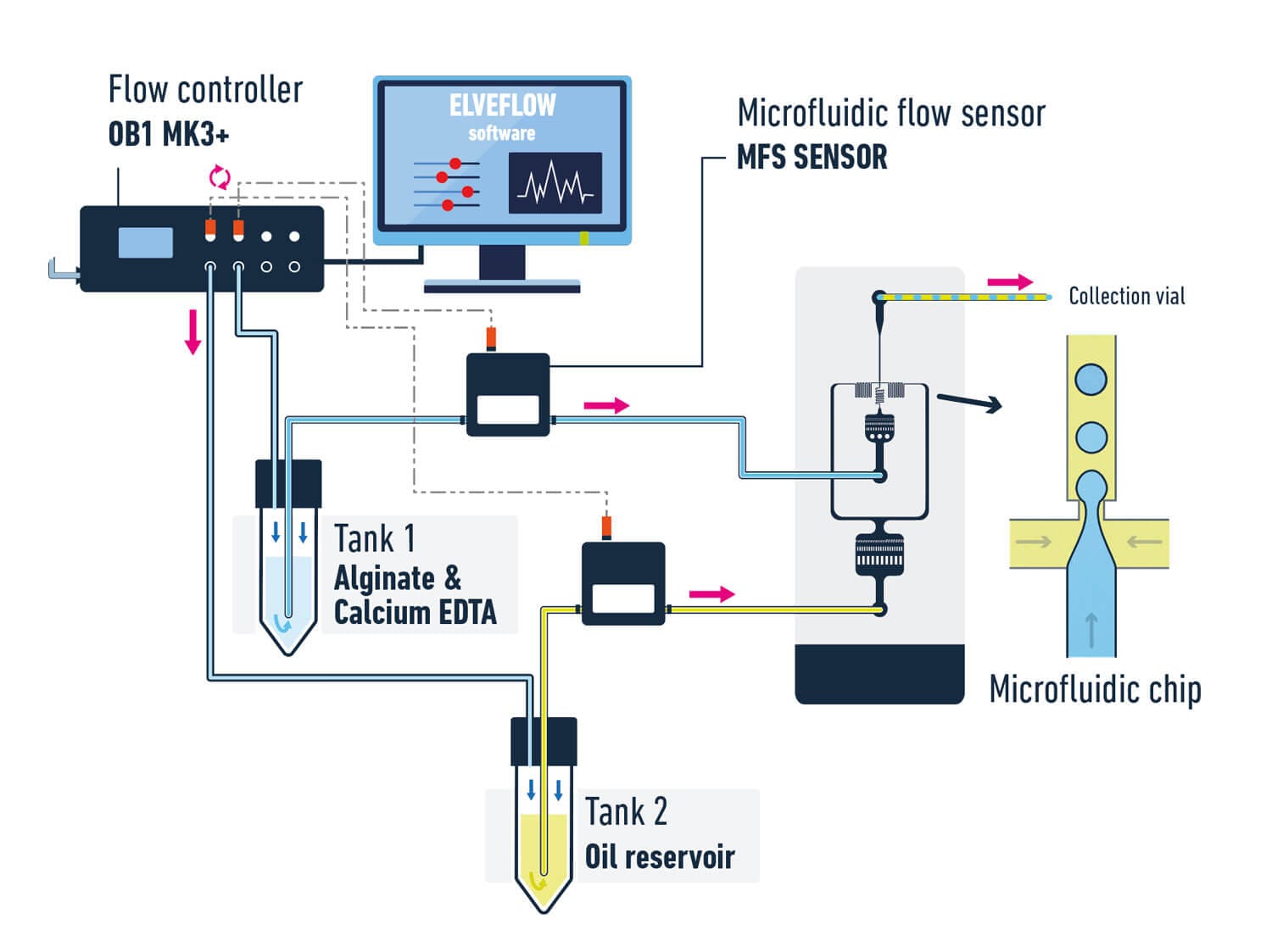
Step 3: Adding acetic acid for Ca2+ ions release leadind to Ca-alginate crosslinking and beads formation
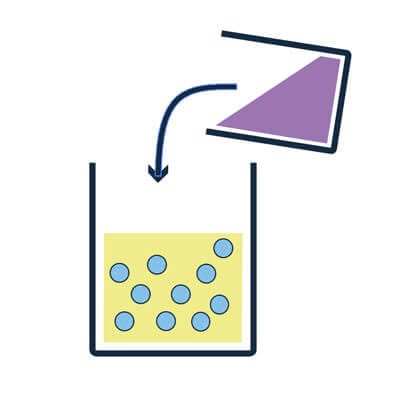
Add the acetic acid solution, and mix to let the acid better access the droplets.
Acetic acid will react with the calcium carbonate to release calcium ions. Through crosslinking reaction with the alginate, the calcium ions will produce Ca-alginate microspheres
Step 4: Adding emulsion breaker to release beads from droplets
Once the gelation finished, droplets should be broken using droplet/emulsion breaking solution.
Droplet breaking solution will remove the surfactant from the droplets to release the alginate beads.


User guide alginate beads production

Microfluidics knowledge
Do you want tips on how to best set up your microfluidic experiment? Do you need inspiration or a different angle to take on your specific problem? Well, we probably have an application note just for you, feel free to check them out!

 Job
Job Collaborations
 Customer
 Other
Other