Microfluidics application note
Published on 27 August 2019
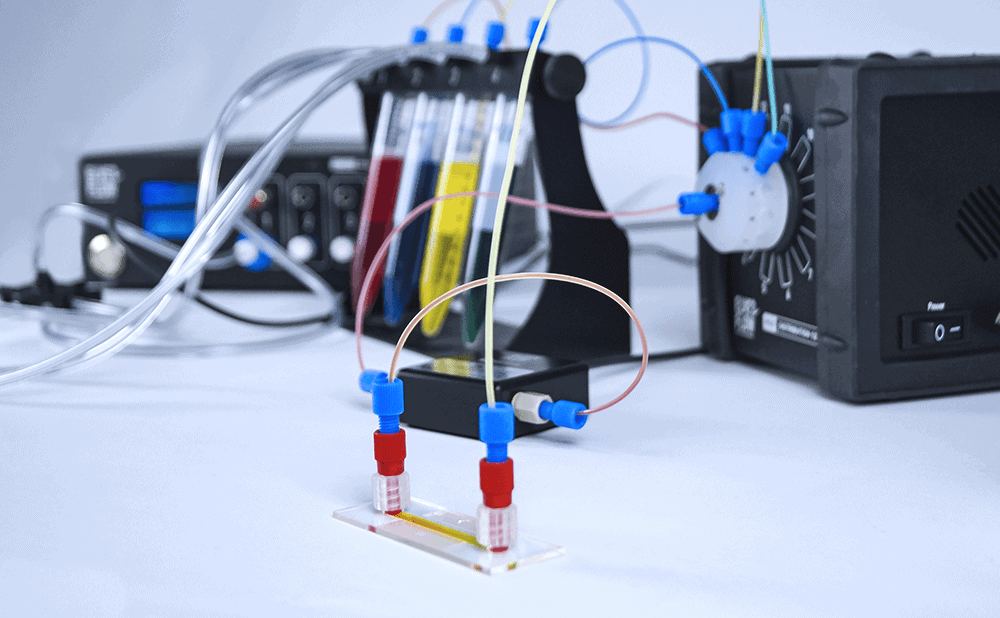
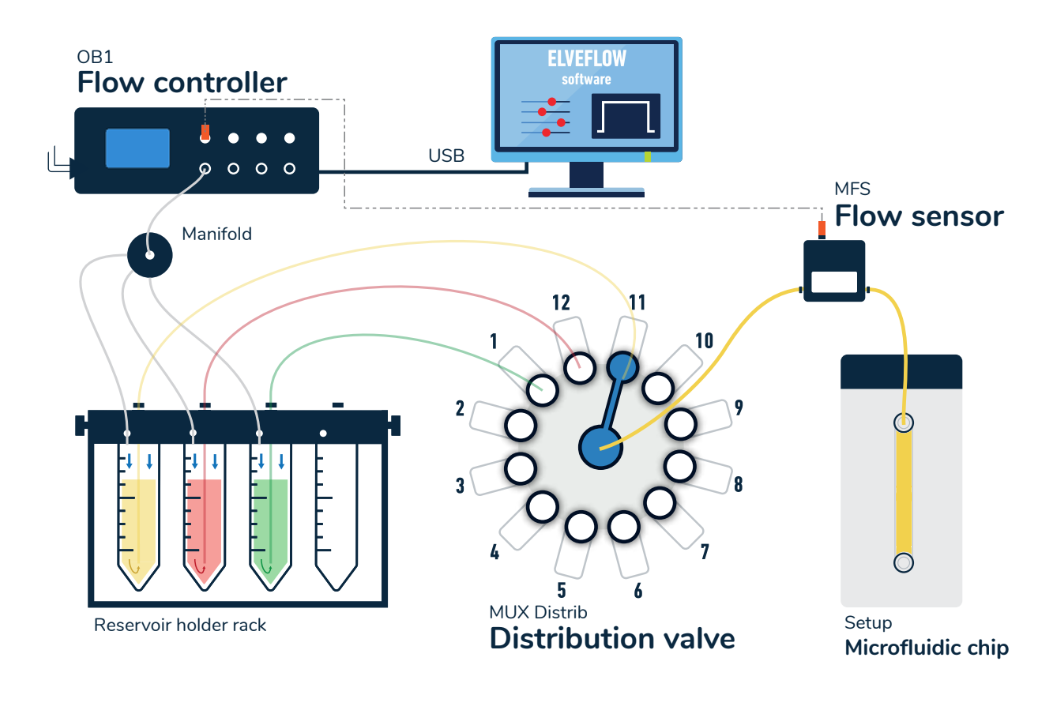
Setup: OB1 microfluidic pressure-driven flow controller + 12/1 valve + IBIDI © flow cell
Medium switch is a widely used technique in cell biology. One of its applications is the study of cell behavior under given flow conditions for different samples.
In this tutorial we walk you through the steps of a fast and stable medium switch using IBIDI© flow cells. You can also discover how to do microfluidic perfusion for dynamic cell culture.
Principle & Benefits of medium switch
The piezo technology used to perform pressure-driven flow control allows a smooth and accurate flow control. It makes it perfectly suited to nurture fragile cells. In comparison, conventional techniques involving syringe pumps or peristaltic pumps are the source of some oscillations that may damage cells.
Visualization is enhanced as the smooth flow allows a sharp focus on a constant focal plane.
Biological compatibility and low cross-contamination are ensured, since the wetted material are glass and PTFE or Tygon.
Medium switch applications
- Cell culture on chip
- Shear stress assays
- Cell response to medium change
- Drug screening
- Toxicity tests
- Organs on chip
- Cell migration
- Adherent cells under flow conditions
- Cell-based Microscopy Assays
Set-up
Material
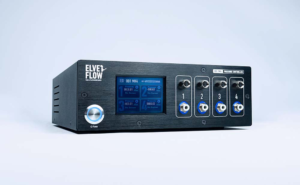
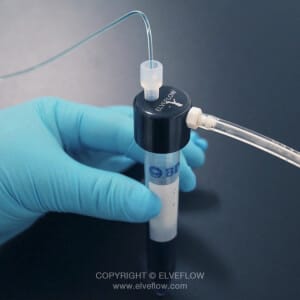

Perfusion pack Perfusion Pack Quickly swap culture media & drugs Discover
Set-up diagram
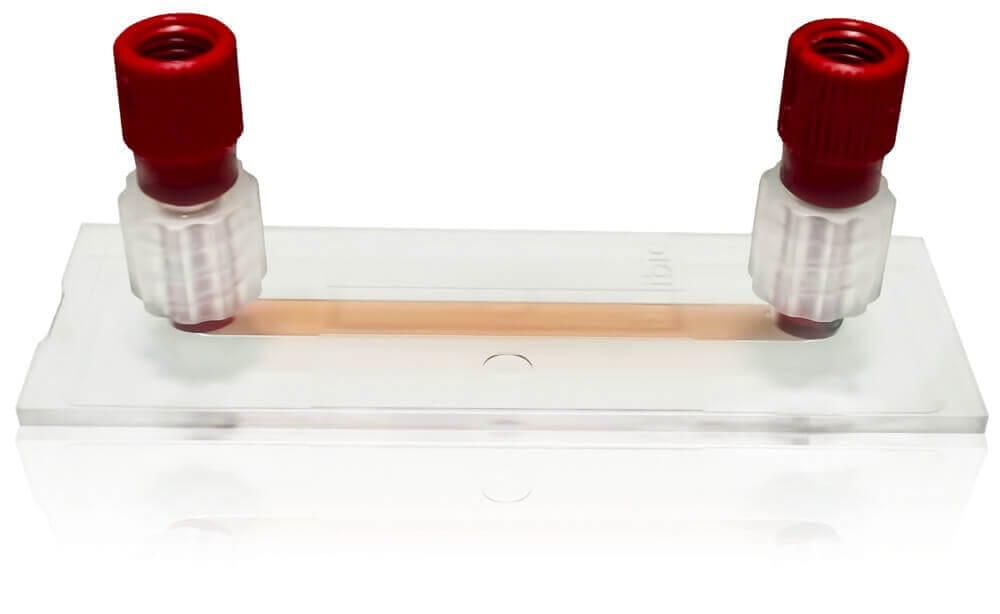
The Ibidi© chips used in this application note are closed flow chambers. They come in different versions with different channel volumes and with up to 6 channels on the same chip, between which the medium switch can be performed. The large observation area makes them perfectly suited for microscopy monitoring.
Using 6 channels simultaneously allows for a higher throughput for statistical data. It is also possible to run the experiment under different conditions to study the effect of these conditions.
Smooth sample switch
Smooth sample switch
Using the 12/1 valve and the ESI software, it is possible to easily perform a sample switch without any disruptive flow.
Check out our related application note that will walk you through the different steps.
The 0.005 %FS stability allows a 10 µbar pressure stability for the smaller pressure range. This high resolution ensures a smooth and stable flow and no damage to the cells.
Physiological condition mimicking
High resolution and fast response time allow the use of accurate custom pressure patterns to mimic physiological conditions. To do so, one has to input a .txt file.
In the following example, we apply one shear stress waveform to cultured cells. The 835ms is set to mimic heart rate through a vessel. It is possible to apply these waveforms repeatedly to the cultured cells for days.
Using the geometry of these slides and the desired shear stress, the necessary flow rates for each waveform and for each chip are also given in the attachment.
Here is average shear stress of interest for us in order to mimic the heartbeat and monitor cell behavior. It corresponds to the systolic blood pressure.
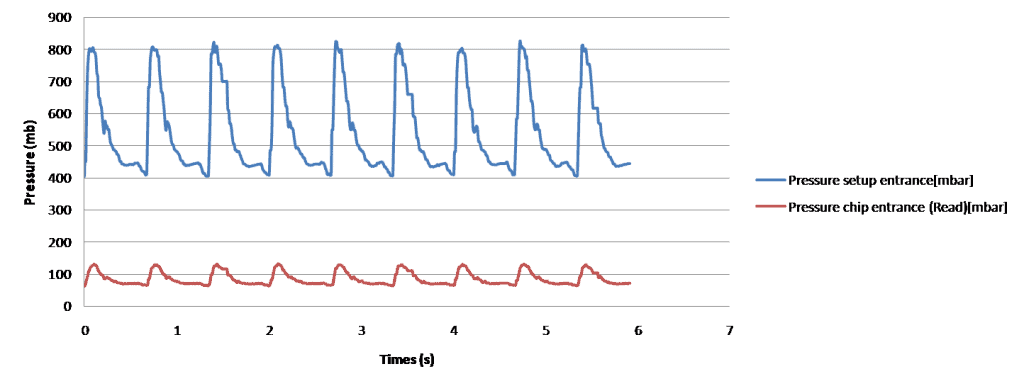
We input the waveform as a .txt file and monitor the read pressure (equals the average shear stress). One can also use in addition a flow sensor if the flow rate is of interest.
Set-up automation
The powerful and user-friendly software enhances flow control and setup automation for long run experiments.
Conclusion
Elveflow offers a high-resolution microfluidic flow controller, perfectly suited to mimic physiological conditions. This hardware is backed with a powerful and user-friendly software allowing setup automation for days. The combination of this flow controller along with valves, and IBIDI© chips is the perfect partner for cell-based assays.
Related publications
A microfluidic circulatory system integrated with capillary-assisted pressure sensors, Y. Chen, H. N. Chan, S. A. Michael, Y. Shen, Y. Chen, Q. Tian, L. Huang and H. Wu, Lab Chip, 2017, DOI:10.1039/C6LC01427E.
Related Products
Related tutorials
How to perform a switch with a Mux Distributor and to control the flow during the switches?

How to perform cell culture on a chip?


Microfluidics knowledge
Do you want tips on how to best set up your microfluidic experiment? Do you need inspiration or a different angle to take on your specific problem? Well, we probably have an application note just for you, feel free to check them out!

 Job
Job Collaborations
 Customer
 Other
Other