The Microfluidic Pressure Controller Landscape in 2026: What Researchers Need to Know
In March 2026, Unchained Labs announced the discontinuation of the entire Dolomite Microfluidics product line. The dolomite-microfluidics.com website now redirects to a single end-of-support notice. No more product pages. No more application notes. No more technical documentation online.
For the hundreds of research teams worldwide who relied on Dolomite instruments, particularly the Mitos P-Pump pressure controller, the Quad Pump, the µEncapsulator droplet system, and the Telos high-throughput platform, this raises a very practical question: what now?
This article is not a product advertisement. It is an honest assessment of the current microfluidic pressure controller landscape, written to help researchers make informed decisions during an unexpected market transition.
What happened to Dolomite Microfluidics?
Dolomite Microfluidics was founded in Cambridge, UK, as part of Blacktrace Holdings. They built a respected portfolio of microfluidic instruments, including pressure-based flow controllers, glass and polymer chips, and integrated droplet systems. Their products appeared in hundreds of peer-reviewed publications.
Unchained Labs acquired Blacktrace in 2023, gaining control of both Dolomite Microfluidics (instruments) and Dolomite Bio (single-cell genomics). While Dolomite Bio continues to operate, the microfluidics instrumentation division was shut down. For researchers currently using Dolomite instruments, this means that spare parts, consumables (particularly proprietary chips and connectors), and technical support will become progressively unavailable over the next two years.

The pressure controller landscape: what is available in 2026?
Pressure-based flow control has become the preferred method for high-precision microfluidic experiments, largely replacing syringe pumps in applications that demand flow stability, fast response, and continuous operation. If you are unfamiliar with the fundamental advantages of pressure control over syringe pumps, we recommend reading our detailed review: How to choose the right microfluidic flow control system.
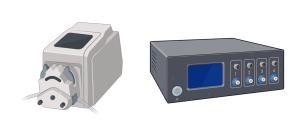
See also: Peristaltic Pump or Pressure Controller.
With Dolomite’s exit, the two principal manufacturers of research-grade microfluidic pressure controllers are Elveflow and Fluigent, both based in France. Several other companies offer pressure regulation systems for niche applications, but for general-purpose microfluidic research, these are the primary options.

Rather than a product-by-product comparison, let us focus on the specifications that actually matter for your experiments and how they should guide your choice.
Five specifications that actually determine your experimental success
1. Flow stability
This is the single most important parameter for reproducibility. Flow stability is expressed as a percentage of full scale (% FS) and defines how much the flow rate deviates from your set point under steady-state conditions. Published studies have shown that flow variations as small as 0.1% can produce measurable differences in droplet diameter (Garstecki et al., Lab Chip, 2006). For demanding applications like single-cell encapsulation or nanoparticle synthesis, a stability below 0.01% FS is the target. The OB1 MK4 pressure controller achieves 0.005% FS, currently the best published value for a commercial microfluidic controller.
2. Number of independent channels
Many microfluidic experiments require simultaneous control of multiple fluid lines: an oil phase, an aqueous phase, a surfactant, a washing buffer. The Mitos P-Pump offered 2 independent channels. The OB1 MK4 provides up to 4 channels, each independently configurable for pressure or vacuum, meaning one instrument can drive a complete droplet generation setup without additional hardware.
3. Response time
When you change a pressure set point, how quickly does the controller reach the new value? For static experiments, this matters less. For dynamic protocols, switching between reagents, modulating droplet size in real time, or performing sequential injections, response time is critical. Syringe pumps typically take seconds to minutes. Pressure controllers operate in the 10–100 ms range, depending on the system architecture and tubing compliance.
4. Sensor integration and closed-loop control
A pressure controller sets pressure; a flow sensor measures the resulting flow rate. The combination — closed-loop control — is what delivers the highest experimental precision. If your controller and sensors come from different manufacturers, you need custom integration. If they are designed as an integrated system, the feedback loop is built in, reducing setup complexity and error. For more on this topic, see our review: Microfluidic flow sensors.
5. Software ecosystem and automation
Modern microfluidic research increasingly requires automated protocols: time-series pressure profiles, valve switching sequences, triggered image acquisition. If your controller only offers a graphical interface, automation requires workarounds. An open SDK (Python, LabVIEW, MATLAB, C++) allows you to build exactly the workflow you need, integrate with microscopes or spectrometers, and ensure complete reproducibility of your protocols.
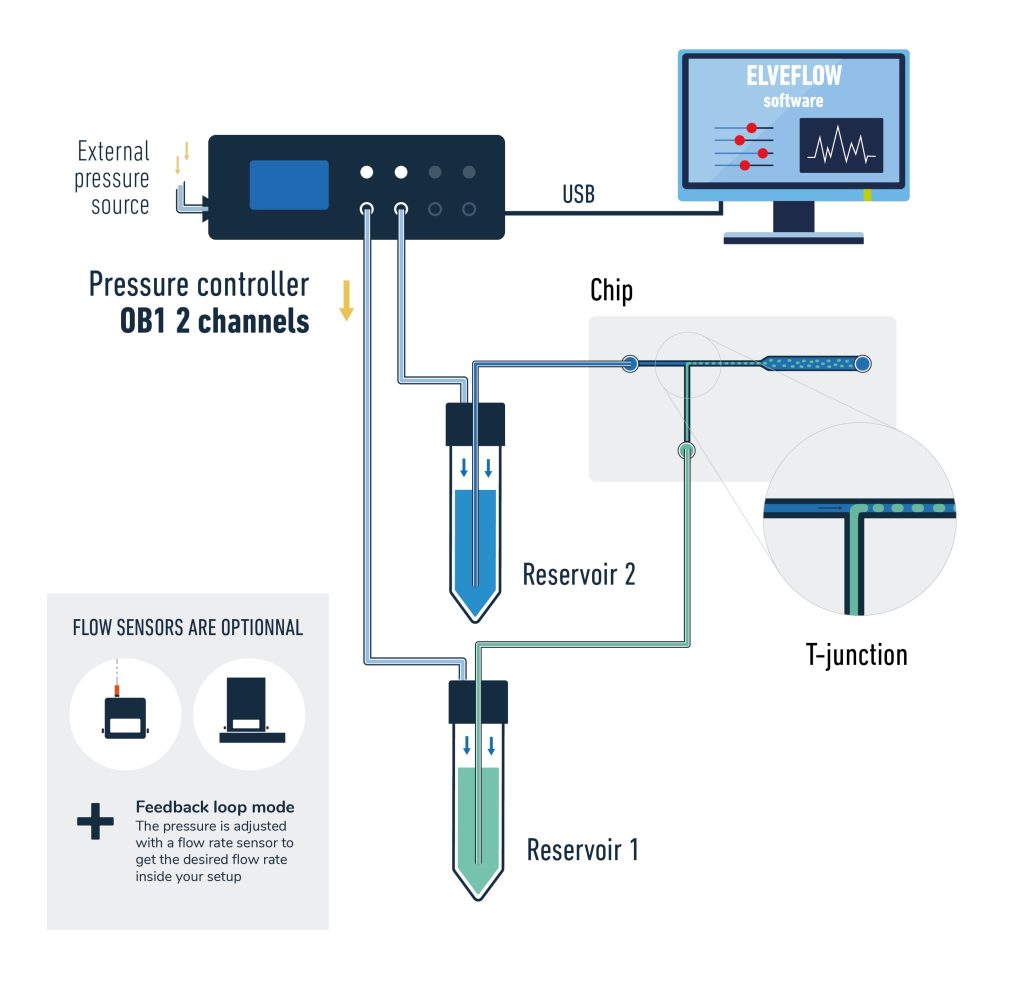
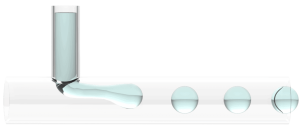
Example of droplet generation with Elveflow pressure controller
For researchers currently using Dolomite instruments
If your lab currently operates a Mitos P-Pump, µEncapsulator, or Telos system, you may be wondering whether transitioning to a different platform requires replacing your entire setup. In most cases, it does not.
Chip compatibility: Dolomite glass chips use standard microfluidic fittings. Any pressure-based controller with standard connectors (1/4-28 UNF, Luer Lock) can drive flow through these chips. Adapter kits exist for the specific Dolomite connector format. Your chips do not need to be replaced.
Protocol migration: If you were running automated protocols through Dolomite’s Flow Control Centre software, these can be recreated in any modern controller’s software environment. The ESI software (Elveflow Software Interface) and its Python SDK can replicate the same time-series pressure profiles, valve sequences, and sensor readouts.
Performance upgrade: Interestingly, many researchers transitioning from Dolomite will experience a performance improvement. The Mitos P-Pump was a solid 2-channel system, but it lacked integrated closed-loop flow control, vacuum capability, and the sub-100 ms response time that newer controllers offer. A migration can be an upgrade, not just a replacement.
A practical framework for choosing your next system
Rather than telling you which product to buy, here is a decision framework based on what we have observed across hundreds of research setups:
Droplet generation
Prioritize flow stability (<0.01% FS), 3–4 independent channels (oil + aqueous + surfactant + wash), and fast response time (<100 ms). Closed-loop flow sensing is recommended for real-time droplet size control. Published reference: Anna et al., Applied Physics Letters, 2003, demonstrated the critical dependence of droplet size on flow rate ratios.
Organ-on-chip perfusion
Prioritize long-term stability (days to weeks), ultra-low flow rates (0.1–50 µL/min), and recirculation capability. A Coriolis flow sensor provides the best accuracy at low flow rates. Vacuum capability enables bubble removal, which is critical for maintaining cell viability. Published reference: Huh et al., Science, 2010, described the microfluidic lung-on-chip requiring precisely controlled bi-directional flow.
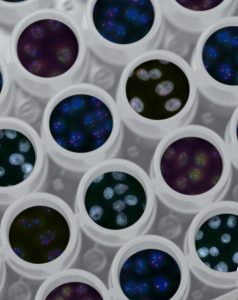
(Image credit to National Cancer Institute)
Nanoparticle synthesis
Prioritize chemical compatibility (glass or PEEK wetted parts), precise flow ratio control, and continuous operation without refill interruptions. PLGA, LNP, and polymer nanoparticle protocols are sensitive to flow ratio variations — even 1% deviation can shift the particle size distribution. Published reference: Karnik et al., Nano Letters, 2008, demonstrated microfluidic PLGA nanoparticle synthesis with size control via flow rate tuning.
Single-cell encapsulation
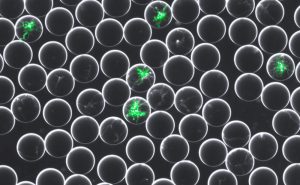
Prioritize droplet uniformity (CV < 2%), pulsation-free flow (pressure-based, not syringe), and high-speed generation capability. Every non-uniform capsule wastes expensive reagents or corrupts single-cell data. Published reference: Klein et al., Cell, 2015, described inDrop — a high-throughput single-cell RNA-seq method relying on monodisperse droplet generation.
Frequently asked questions
Can I use my existing Dolomite glass chips with a different controller?
Yes. Dolomite glass chips use standard microfluidic connectors. With the appropriate adapter (1/4-28 to Luer Lock or direct PEEK fitting), these chips work with any pressure-based controller, including the Elveflow OB1. No chip modifications are needed.
What is the difference between flow stability and flow accuracy?
Flow accuracy describes how close the measured flow rate is to the set point. Flow stability describes how much the flow rate varies over time at a constant set point. For most microfluidic experiments, stability matters more than accuracy, you need consistent flow, even if the absolute value requires calibration.
How long does it take to transition from a Dolomite system to an Elveflow setup?
Most transitions take a few weeks, including delivery, setup, and protocol validation. Our applications team provides free technical consultations to help design the optimal configuration for your specific experiments.
Need guidance on configuring the right microfluidic setup for your research? Our applications team provides free technical consultations, whether you are transitioning from an existing platform, starting a new project, or scaling up from manual methods. Contact us at [email protected] or visit elveflow.com/contact/.
Written and reviewed by Imen Bourassine, Data Science & AI Engineering, Elvesys/Elveflow.
For more content about microfluidics, visit our Microfluidic Reviews section.

 Job
Job Collaborations
 Customer
 Other
Other