Microfluidic reviews
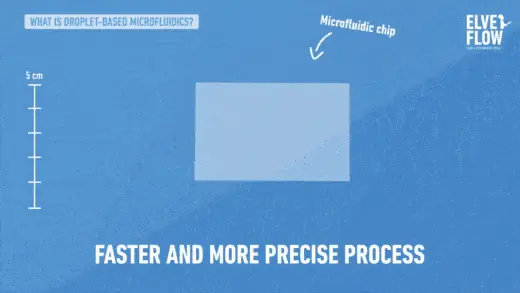
This short review aims to describe microfluidics definition from the concept, the advantages and the various fields of application.
Microfluidics took off in the 1990’s thanks to the Micro Electro Mechanical System (MEMs) technology.
Over the past 20 years, microfluidics offered a tremendous technological breakthrough for the scientific community as a means to miniaturize the work of a whole lab onto a microfluidic chip less than a few inches (cm) big!
What is it?
Microfluidics definition: microfluidics is the study and manipulation of fluid flow at the sub millimeter scale (Whitesides, 2006).
Other than this, microfluidics really is all around us, from our tiniest blood capillaries to the networks of sap in plants. More technological daily applications also include some medical tests and even inkjet printing.
Some thought to harvest the mechanics and possibilities offered by microfluidics, with the right tools to control pressure and flow inside microfluidics channels.
Who uses it?
As a versatile science and technology, microfluidics is used by researchers & industrials, who can both benefit from its many fields of application. One microfluidics definition is that it can be used to spearhead breakthroughs and lead innovative research, as well as be an essential brick in an industrial production process where there is a need to scale up while cutting down on reagent cost.
Biology
- Dynamic microfluidic cell culture
- Organ-on-chip
- Soil-on-chip
- Single cell encapsulation
- Biocompatible scaffold generation
- Point of care
- Synthetic Biology
Physics
- Leak-testing
- Soft robotics
- 3D laser printing
Through miniaturization & automation, microfluidics are a great tool to:
- Improve the precision of experiments
- Lower limits of detection
- Run multiple analyses simultaneously
Microfluidics definition: application example, droplet handling & generation
Droplet batch method versus droplet microfluidics generation


Microfluidics definition: experimental advantages
It’s in the very microfluidics definition: microfluidics implies the handling of very small volumes of fluids (gas or liquids) that require very precise fluid control with microfluidic systems composed of flow controller (pressure-driven flow controller) or pumps (syringe, peristaltic), flow sensors (Coriolis flow sensor and/or standard flow sensor) and distribution, recirculation or injection valves to control the fluid passing through your microfluidic device.

Microfluidic system schematic for droplet generation

Microfluidic system employed experimentally for droplet generation
Now that you know about microfluidics definition…
For more insight into the practicals of microfluidics instrumentation, watch those two videos!
For any additional questions if you want to get into more than just microfluidics definition, feel free to contact our team of experts!
For more information or Technical discussion

Microfluidics knowledge
Do you want tips on how to best set up your microfluidic experiment? Do you need inspiration or a different angle to take on your specific problem? Well, we probably have an application note just for you, feel free to check them out!
-
 reviews
Water-in-Oil Emulsions: Mechanisms, Applications, and Innovations
Learn about water-in-oil emulsions and how Elveflow’s microfluidic solutions offer precision control for applications in food, cosmetics, and pharmaceuticals.
-
 reviews
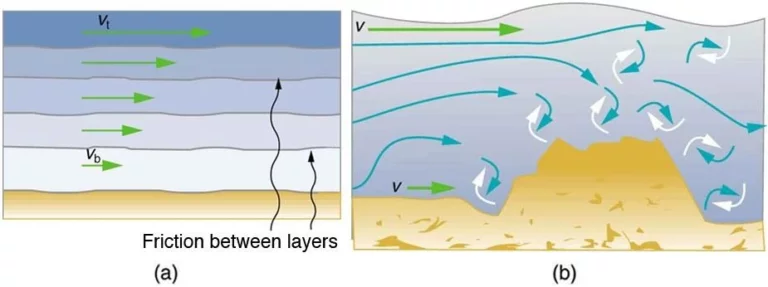
Laminar flow and capillary flow in microfluidic chips
The profile of laminar flow through a small straight pipe may be approximated by small concentric cylinders towards the direction of the flow.
-
 reviews
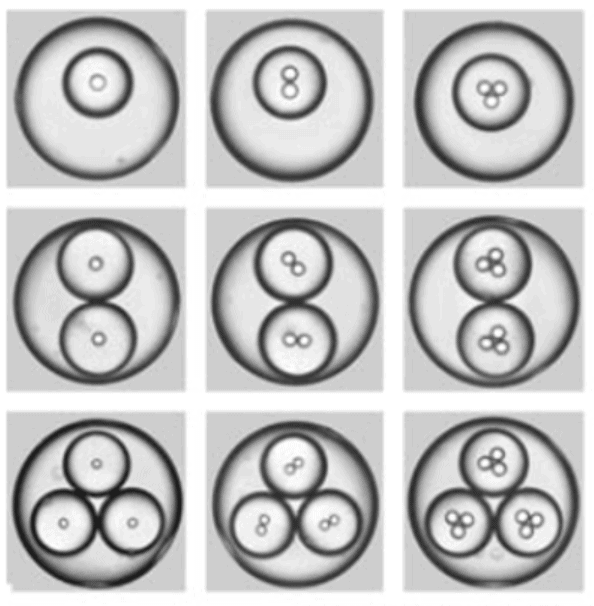
Microreactors & Microfluidics in Chemistry – a Review
This review introduces the field of microfluidics and provides an overview of the advantages, disadvantages, and current applications of microfluidics in chemistry.
-
 reviews
Air-Liquid Interface and Optimized Cell Culture Substrates for Microfluidic Lung-on-a-Chip Applications
Explore the intricacies of air-liquid interfaces and optimized cell culture substrates in microfluidic lung-on-a-chip systems.
-
 reviews
Microfluidic Tumor-on-Chip Systems for Breast Cancer Research
Explore the advanced microfluidic tumor-on-chip systems revolutionizing breast cancer research. How these systems offer precise drug testing.
-
 reviews
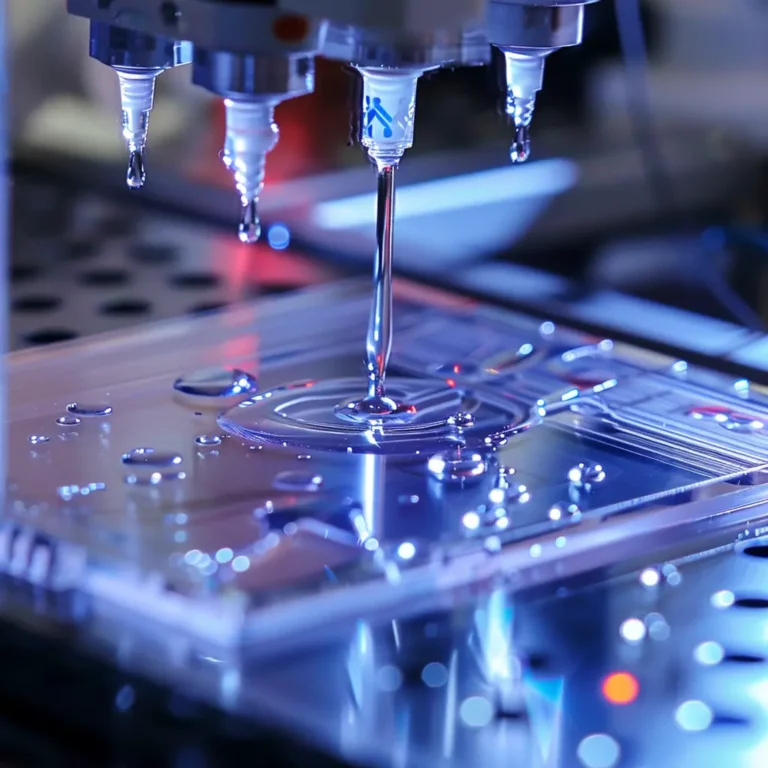
Droplet Detection and Measurement in Microfluidic Channels: An In-Depth Analysis
Explore methods for droplet detection and measurement in microfluidic channels, including optical imaging and laser-initiated detection.
-
 reviews
Gut-on-Chip: Advancing Intestinal Research
Discover how gut-on-a-chip technology is revolutionizing intestinal research & drug development by replicating the gut's complex environment.
-
 reviews
Emerging Trends in Microfluidics
Centrifugal microfluidics, or "Lab-on-a-CD," leverages centrifugal force to manipulate fluids on a microscale.
-
 reviews
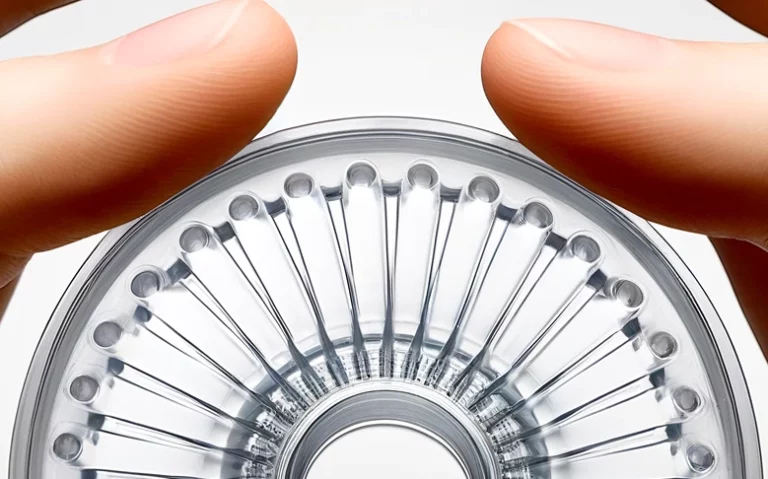
Advancements in Centrifugal Microfluidics
Centrifugal microfluidics, or "Lab-on-a-CD," leverages centrifugal force to manipulate fluids on a microscale.
-
 reviews
NANOCRYSTALS IN MICROFLUIDICS
Nanocrystals (NCs) are tiny crystalline objects, with unique properties crucial for scientific and technological applications.
-
 reviews
CRISPR-CAS9 and its Relation with Microfluidics
The integration of CRISPR-Cas9 with microfluidics has led to the development of innovative techniques for genetic editing and screening.
-
 reviews
Microfluidics Devices in Pharmacogenomics Paving the way for precision medicine
Pharmacogenomics is the study of how an individual’s genetic variants influence drug responses and treatment efficacy.
-
 reviews
The Dynamics of Fungal Spore Dispersal: Insights from Microfluidic Models
The Dynamics of Fungal Spore Dispersal: Insights from Microfluidic Models
-
 reviews
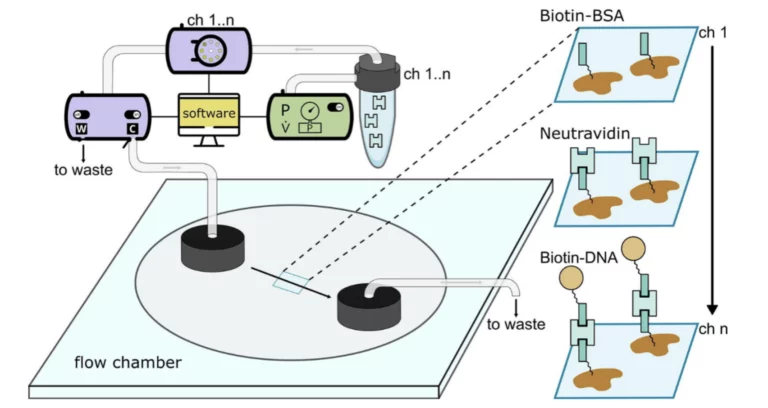
Exploring Free Flow Electrophoresis: A Comprehensive Review
Free-flow electrophoresis (FFE) is a technique that enables the continuous separation of analytes as they flow through a planar channel.
-
See all
General microfluidics

 Job
 Collaborations
 Customer
 Other