Microfluidics and microfluidic devices: a review
At a glance
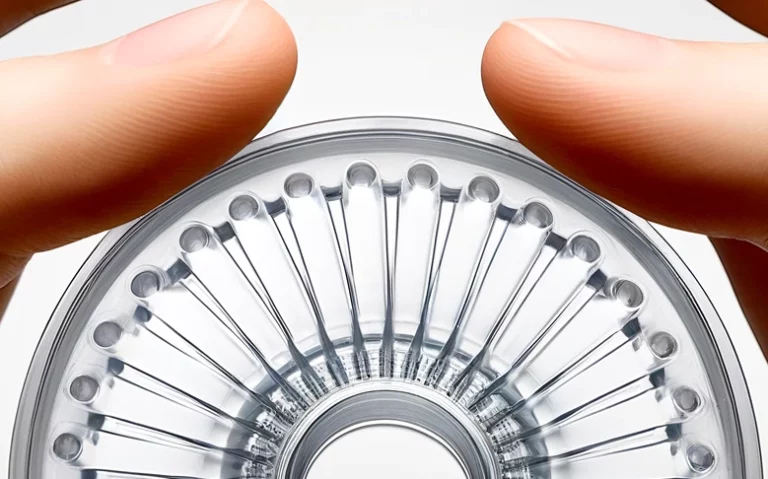
A microfluidic chip is a set of connected micro-channels etched or molded into a material such as glass, silicon or a polymer like PDMS. The micro-channels achieve features such as mixing, pumping, sorting or controlling the biochemical environment, and inputs and outputs link the chip to the outside. Microfluidic chips are used in biomedical lab-on-a-chip devices, cell biology research and protein crystallization.
- Origins
- Derived from photolithographic methods of the semiconductor industry; polymer molding grew strongly in the early 2000s
- Chip materials
- Polymers such as PDMS, ceramics such as glass, semiconductors such as silicon, metal
- Fabrication steps
- Channel design, photolithography mold, PDMS molding, plasma bonding to glass
- Flow control
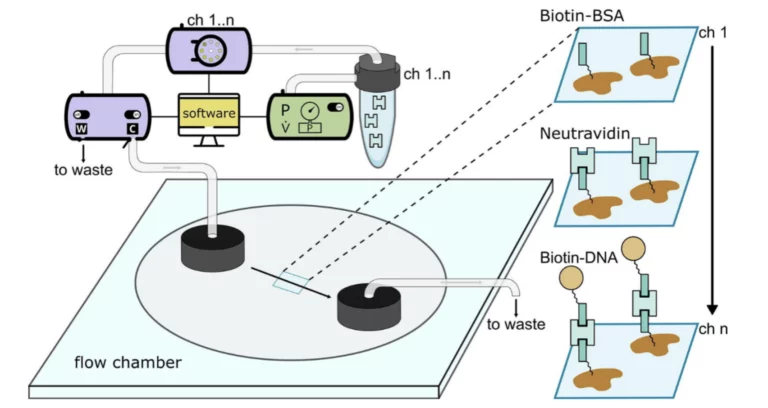
- Active: pressure controller, syringe pump, peristaltic pump; passive: hydrostatic pressure


 Industrial microprocessor


 Photolithographic mask made on a glass substrate with etched chrome















 Job
 Collaborations
 Customer
 Other