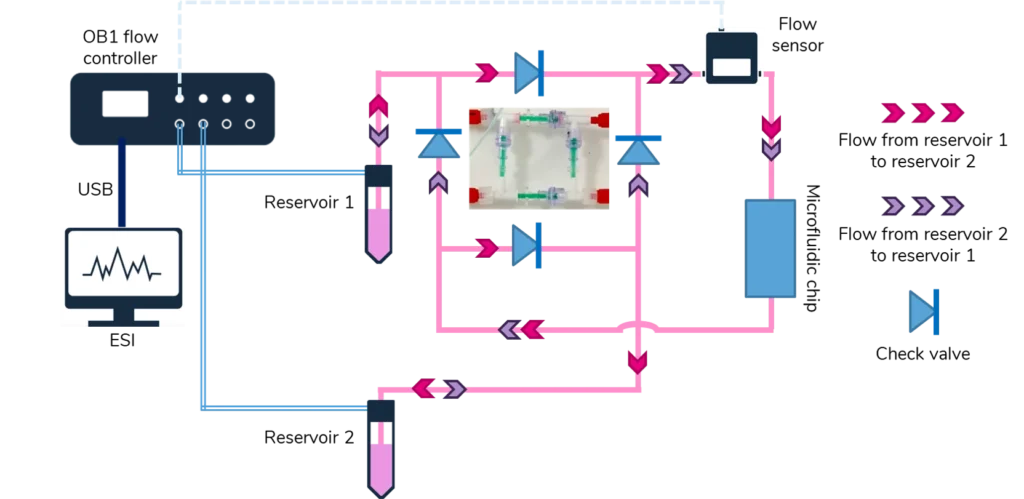
Recirculation loop setup
Check our recircualtion loop use case for unidirectional microfluidic experimentsThe fluid remains in the incubator, reducing the possibility of bubbles forming with the MFS+
Easier to use
No USB or electrical connection is required
Features & Benefits
Recirculation loop setup
Allows a long term perfusion setup with our passive recirculation loop, featuring four check valves that enable unidirectional flow with exceptional stability. Unilateral flow provides more meaningful results compared to traditional back-and-forth flows.
Using the state-of-the-art OB1 flow controller, paired with in-line sensors, you can accurately recirculate fluids such as the medium used in dynamic cell cultures. This setup offers precision and reliability, ensuring consistent flow in one direction throughout your experiments.
Recirculation can also be integrated with existing instruments, utilizing valves or MUX recirculation for added versatility.
| Passive Check Valves | Active Valves |
|---|---|
| Very light and compact (10 cm²) | Usually bigger and heavier |
| Can directly go into incubators | Don’t go into incubators |
| Does not need electric plug or USB connection | Need at least electricity |
| Very cheap | Expensive |
| Straightforward to use | Tricky to use for beginners |
| Easily replaceable/washable | Usually require complicated washing procedure |
In this setup, the four passive check valves are arranged to ensure that the flow within the connected microfluidic chip always moves in the same direction, whether pressurizing the first or second reservoir. This method allows for continuous unidirectional flow, enhancing the effectiveness of your microfluidic experiments.
The OB1 flow controller, known for its precision and speed, uses flow rate measurements from a flow sensor to create a highly accurate feedback loop, ensuring optimal performance in your recirculation process.
Applications of Microfluidic Recirculation
Microfluidic recirculation is essential for long-term cell cultures, where maintaining physiologically relevant conditions is crucial. In vivo cell responses are influenced by key factors like tension, compression, and shear stress, which are vital for replicating the physiological environments of systems like the intestines and blood vessels. Unlike traditional Petri dish cultures, which lack these mechanical stimuli, microfluidic perfusion chambers deliver them through controlled fluid flow over the cells. This approach is particularly valuable when working with expensive fluids, as recirculation minimizes waste and maximizes efficiency.
Key Applications of Check Valve Recirculation in Cell Culture:
- Tissue-on-a-chip models: Ideal for studying chemicals produced in low concentrations within a physiologically accurate environment.
- Expensive media supplements: Optimizes the use of costly media in cell culture experiments, ensuring high-quality results while controlling costs.
- High-volume experimentation: Perfect for long-term cell cultures and investigations into the effects of medium to high shear stress.
- And many more innovative applications!
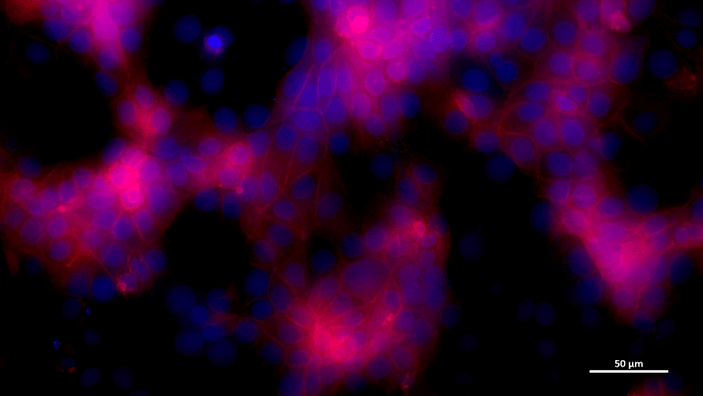
For instance, MCF7 cells cultured with continuous medium recirculation at 10 µL/min for 24 hours demonstrated excellent viability and structural organization, as shown by staining with Hoechst/rhodamine phalloidin.
With over a decade of experience in microfluidic flow control, we offer cutting-edge solutions tailored to your specific research needs, helping you achieve precise and reliable results in your microfluidic applications.
Check Recirculation Loop Setup
Our all in one setup ensures integration across various instruments, allowing you to begin your experiments immediately. The entire system is controlled by a single piece of software, which can be utilized for multiple applications. We also provide comprehensive and ongoing support to help you maximize the effectiveness of your experiments.
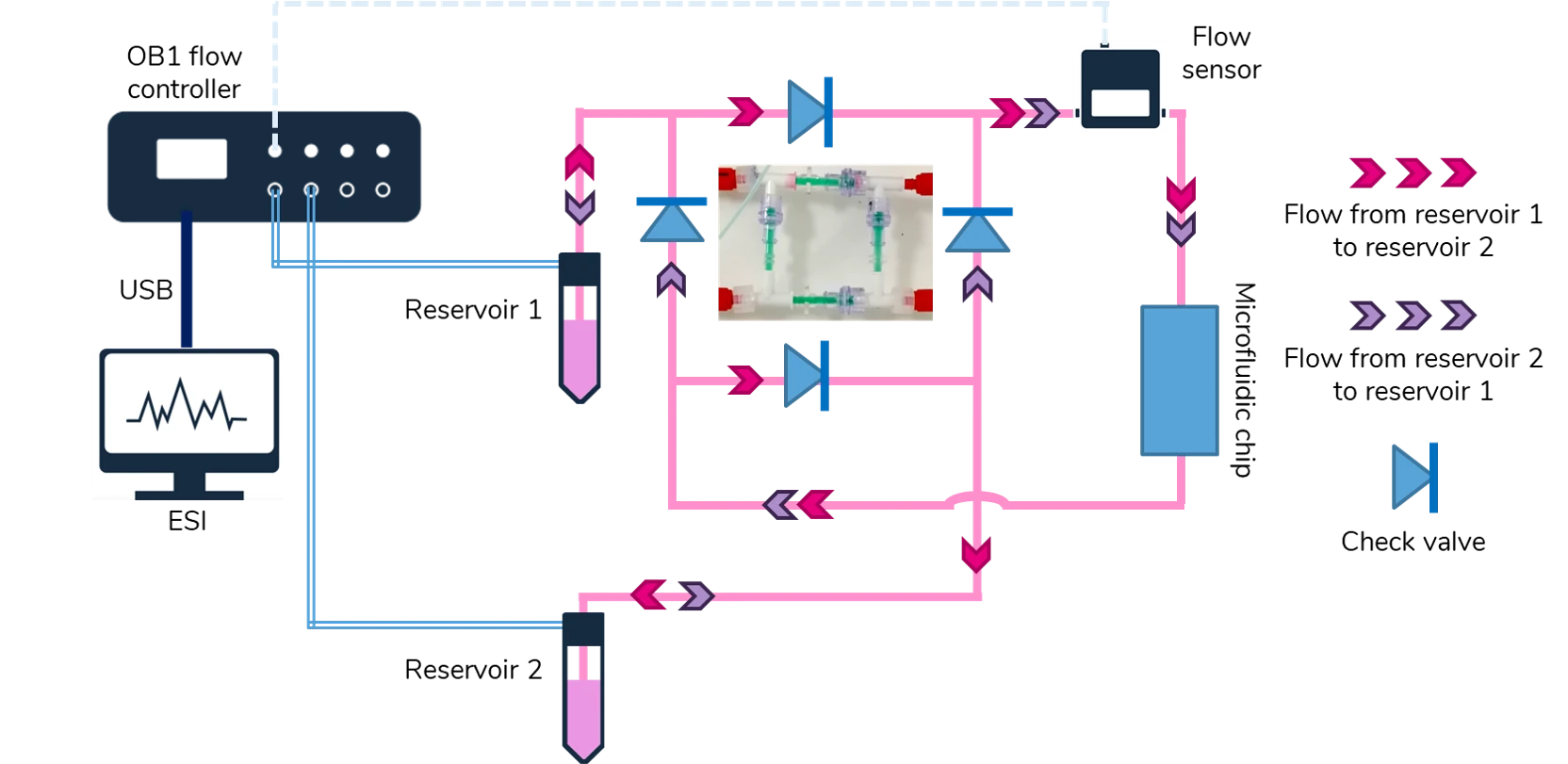
This system includes:
- OB1 flow controller
- ESI software
- Two Eppendorf or Falcon reservoirs
- Recirculation loop
- Any microfluidic chip
- Optional: Microfluidic flow sensor
The fluid flow direction within the microfluidic chip remains consistent, regardless of which reservoir is under pressure.
This setup provides you with the flexibility and precision needed for efficient and reliable experimentation in your microfluidic applications.
Configuration
Customize Your Recirculation Setup
Our instruments are compatible with a wide range of commercially available chips from various brands. We understand that each research application is unique, and our microfluidic specialists are here to help tailor the setup to meet your specific needs. Based on your requirements, we’ll recommend the most suitable instruments and accessories and assist you in setting up your microfluidic platform for optimal performance.
– Explore our other use cases for various applications –


 Job
Job Collaborations
 Customer
 Other
Other