Pressure driven flow control for Nanofluidics
At a glance
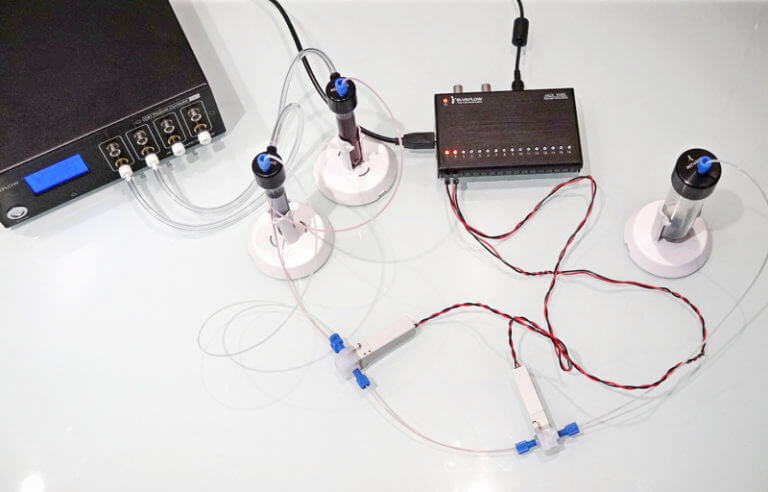
This application note explains how pressure-driven flow control works and its advantages for nanofluidics. A gas input pressure applied to a hermetic liquid tank pushes the liquid from the tank to the microfluidic or nanofluidic device, so controlling the pressure controls the flow. The technique gives pulseless flow and handles volumes from several hundreds of mL to a few µL.
- Applications
- Cell sorting, nanoparticle synthesis, nanostructured membranes, nanopore sensors
- Main advantage
- With droplet generation: parallel experiments, size control, automation, small sample volumes
- Key parameter
- Droplet size and frequency depend on the inlet flow rate ratio


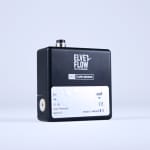

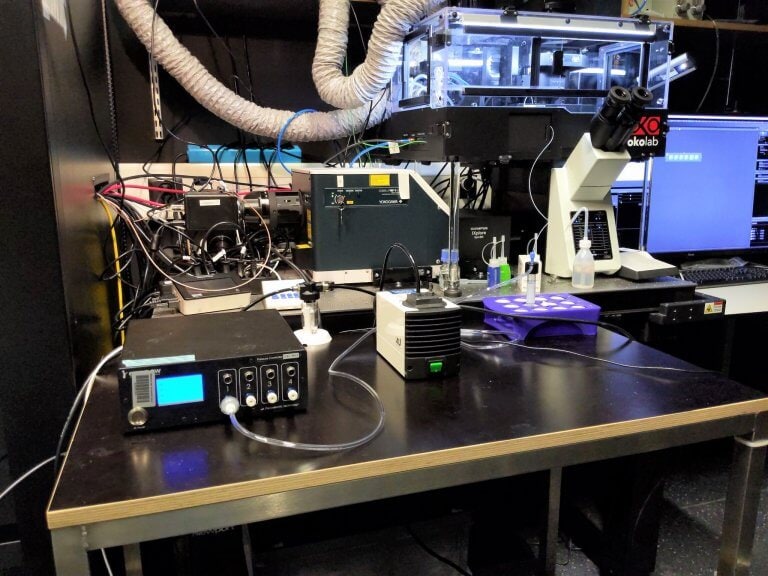
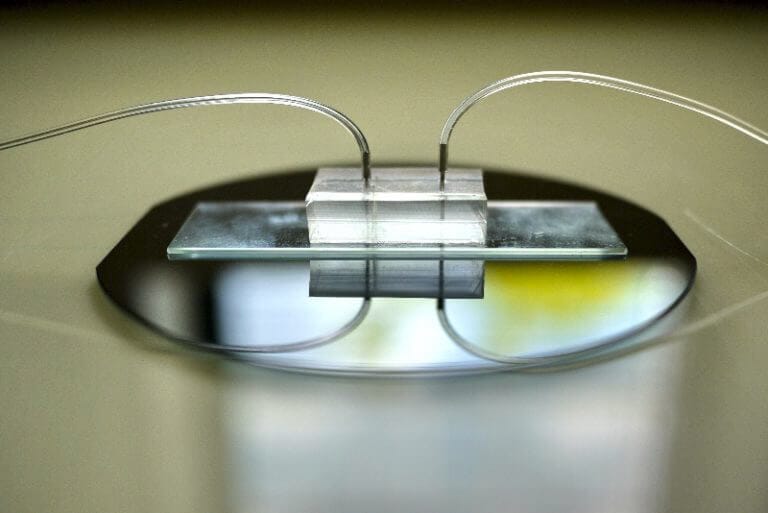
 A pressure controller pressurizes a tank, such as Eppendorf, Falcon or a bottle containing the sample, which is then smoothly and quasi-instantly injected inside a microfluidic chip.







 Job
 Collaborations
 Customer
 Other