
Microfluidics knowledge
Do you want tips on how to best set up your microfluidic experiment? Do you need inspiration or a different angle to take on your specific problem? Well, we probably have an application note just for you, feel free to check them out!
-
 note
Real-Time Fluorescence Analysis of Mixing in a Tesla Micromixer
Real-Time Fluorescence Analysis of Mixing in a Tesla Micromixer
 note
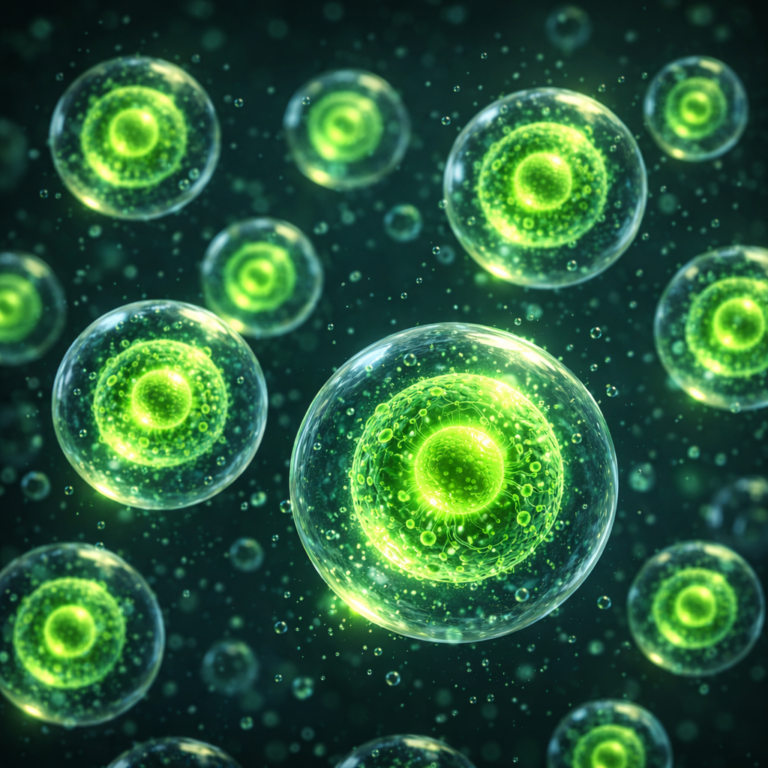
Mechanoactivation of Single Stem Cells in Microgels Using a 3D-Printed Stimulation Device
A microfluidic and pressure-driven platform enabling reproducible mechanoactivation of individually encapsulated stem cells under live-cell imaging in a true 3D environment.
 note
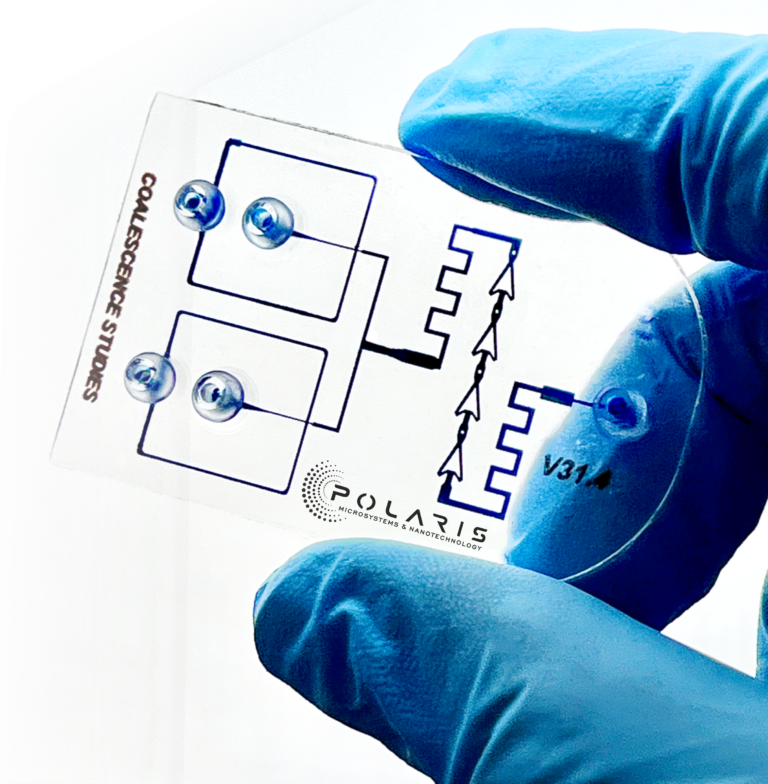
High-Resolution Microfluidic Device for Precise Oil-in-Water Emulsion and Coalescence Analysis
Discover a high-resolution microfluidic device designed for precise oil-in-water emulsion studies and coalescence analysis. Learn how Elveflow's advanced flow control enhances petroleum research and beyond.
 note
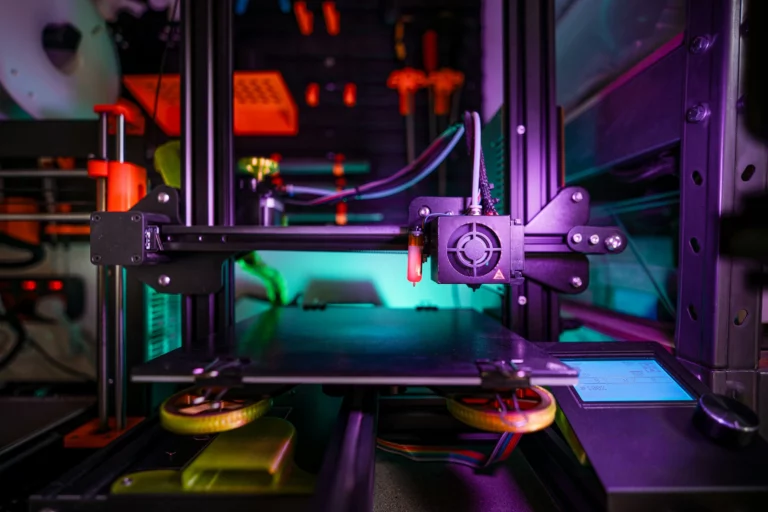
Direct-Ink-Writing Flow Control with Elveflow Pressure Sensor
This application note demonstrates a smart use ouf Elveflow's Pressure sensor and sensor reader for Direct-Ink-Writing flow control.
-
 note
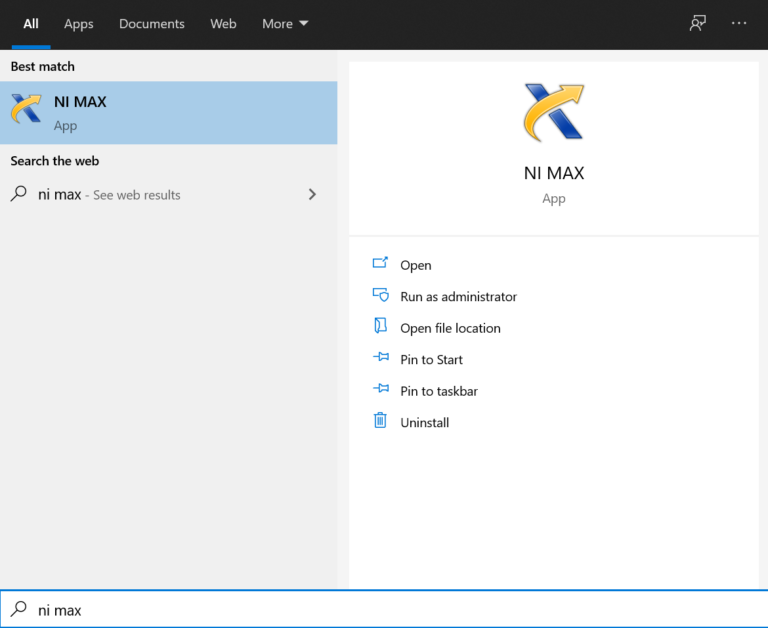
Elveflow SDK Tutorial Part 1: Setting Up Your Environment on the OB1
Learn how to set up your development environment for Elveflow products with this comprehensive tutorial.
 note
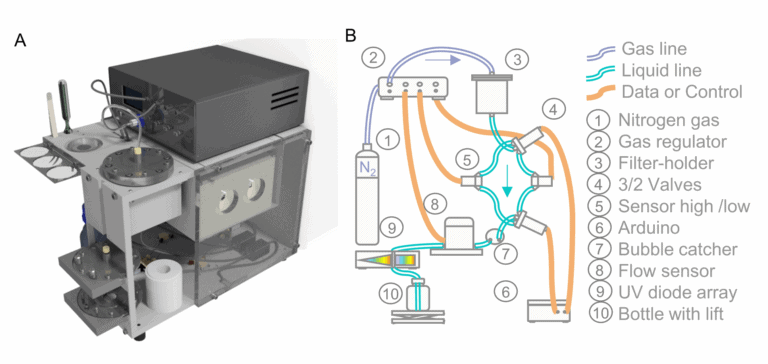
Utilizing a high precision microfluidic dead-end filtration setup to achieve global alignment of single walled carbon nanotubes
Single-wall carbon nanotubes (SWCNTs) are considered as quasi 1-dimensional (1D) carbon nanostructures, which are known for their outstanding anisotropic electronic, mechanical, thermal and optical properties.
 note
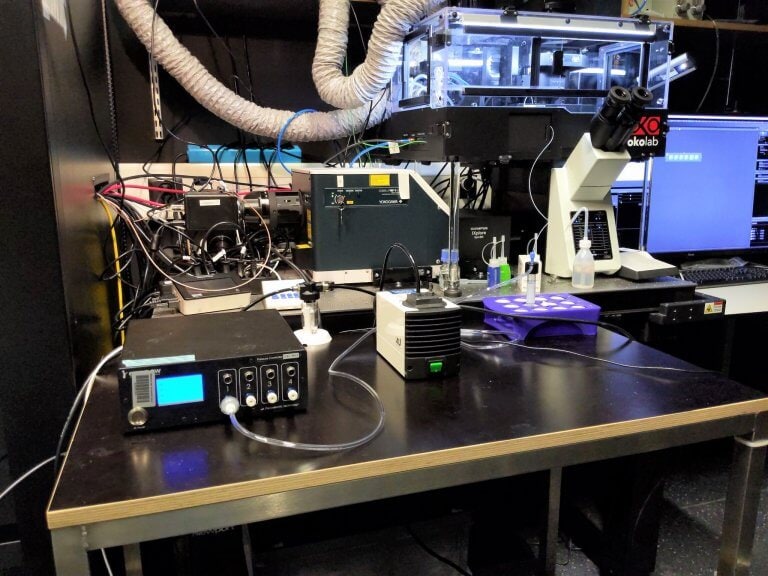
How do you synchronize a microscope with a microfluidic perfusion system?
This application note describes how to combine and synchronise liquid perfusion and imaging using an Olympus spinning disc confocal microscope together with an Elveflow pressure-driven flow controlled microfluidic system.
-
 note
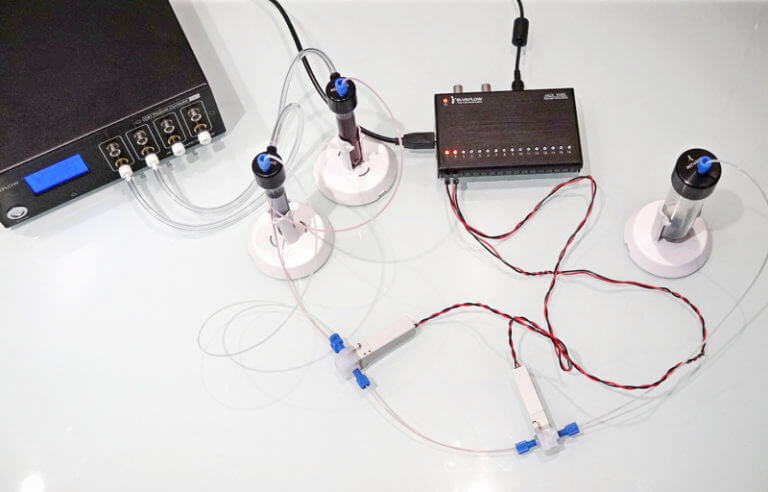
REDIRECTING FLOW WITH A MICROFLUIDIC VALVE CONTROLLER
The MUX Wire enables you to host up & control many valves of your choice. It gives you a total freedom to add up to 16 valves and put them anywhere in your set-up and control them independently and simultaneously.
 note
Active Micromixers-on-a-Chip
Mixing is a crucial step for several microfluidic applications like chemical synthesis, clinical diagnostics, sequencing and synthesis of nucleic acids
 note
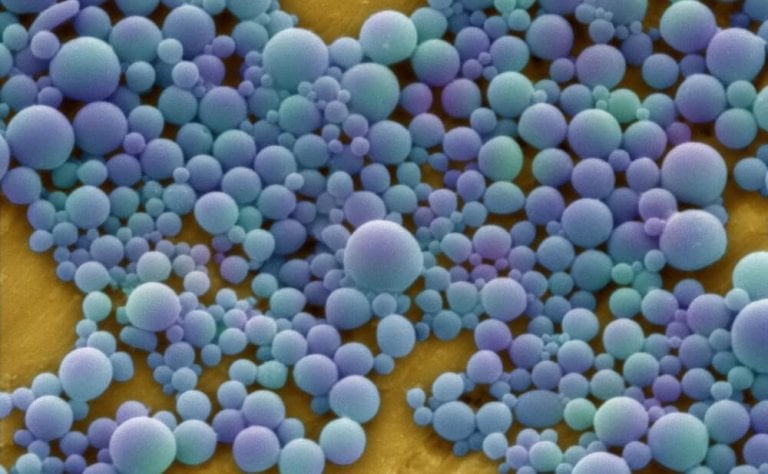
Nanoparticle generator
This application note describes how microfluidic can be employed as a nanoparticle generator based on the example of PLGA bead generation.
 note
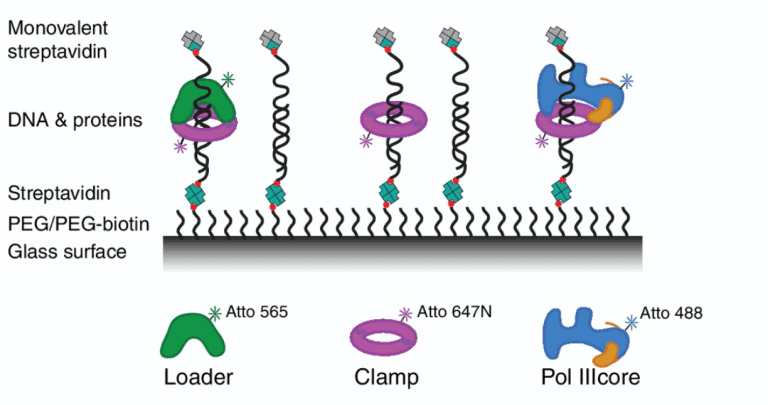
Microfluidic colocalization set-up for DNA analysis
This user guide will show you how to run microfluidic colocalization studies of single molecule spectroscopy.
-
 note
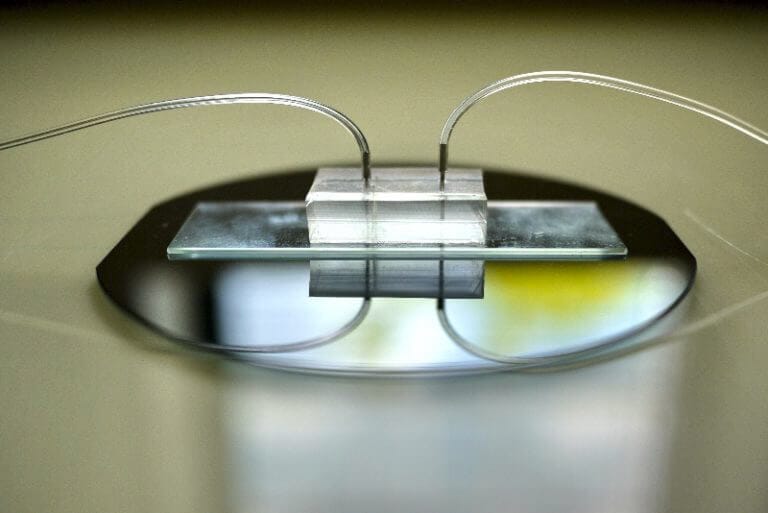
Exploring Pneumatic Pumps and Pressure-Driven Flow Control Technology
This application note explores the basic principle of pneumatic pumps and a flow controller based on the basic principle of pneumatic pumps, known as pressure driven flow control. It also demonstrates the applications of pressure driven flow control in a range of industrial & research fields.
 note
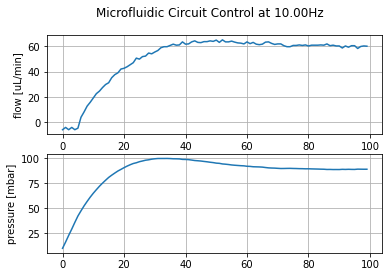
Fluid handling
Microfluidics is the science of handling small amounts of liquids, inside micrometer scale channels. Discover how to handle fluids for your microfluidic experiments.
-
note
Real-Time Fluorescence Analysis of Mixing in a Tesla Micromixer
Real-Time Fluorescence Analysis of Mixing in a Tesla Micromixer
note
Mechanoactivation of Single Stem Cells in Microgels Using a 3D-Printed Stimulation Device
A microfluidic and pressure-driven platform enabling reproducible mechanoactivation of individually encapsulated stem cells under live-cell imaging in a true 3D environment.
-
note
High-Resolution Microfluidic Device for Precise Oil-in-Water Emulsion and Coalescence Analysis
Discover a high-resolution microfluidic device designed for precise oil-in-water emulsion studies and coalescence analysis. Learn how Elveflow's advanced flow control enhances petroleum research and beyond.
note
Direct-Ink-Writing Flow Control with Elveflow Pressure Sensor
This application note demonstrates a smart use ouf Elveflow's Pressure sensor and sensor reader for Direct-Ink-Writing flow control.
-
note
Elveflow SDK Tutorial Part 1: Setting Up Your Environment on the OB1
Learn how to set up your development environment for Elveflow products with this comprehensive tutorial.
-
note
Utilizing a high precision microfluidic dead-end filtration setup to achieve global alignment of single walled carbon nanotubes
Single-wall carbon nanotubes (SWCNTs) are considered as quasi 1-dimensional (1D) carbon nanostructures, which are known for their outstanding anisotropic electronic, mechanical, thermal and optical properties.
note
How do you synchronize a microscope with a microfluidic perfusion system?
This application note describes how to combine and synchronise liquid perfusion and imaging using an Olympus spinning disc confocal microscope together with an Elveflow pressure-driven flow controlled microfluidic system.
-
note
REDIRECTING FLOW WITH A MICROFLUIDIC VALVE CONTROLLER
The MUX Wire enables you to host up & control many valves of your choice. It gives you a total freedom to add up to 16 valves and put them anywhere in your set-up and control them independently and simultaneously.
note
Active Micromixers-on-a-Chip
Mixing is a crucial step for several microfluidic applications like chemical synthesis, clinical diagnostics, sequencing and synthesis of nucleic acids
-
note
Nanoparticle generator
This application note describes how microfluidic can be employed as a nanoparticle generator based on the example of PLGA bead generation.
note
Microfluidic colocalization set-up for DNA analysis
This user guide will show you how to run microfluidic colocalization studies of single molecule spectroscopy.
-
note
Exploring Pneumatic Pumps and Pressure-Driven Flow Control Technology
This application note explores the basic principle of pneumatic pumps and a flow controller based on the basic principle of pneumatic pumps, known as pressure driven flow control. It also demonstrates the applications of pressure driven flow control in a range of industrial & research fields.
note
Fluid handling
Microfluidics is the science of handling small amounts of liquids, inside micrometer scale channels. Discover how to handle fluids for your microfluidic experiments.
-
 note
How to choose flow regulation parameters?
Flow regulation is a compulsory operation in most of the microfluidics operations. In some applications such as 2D or 3D cell culture, flow regulation is essential since accurate micro-environmental parameters control is required. Elveflow do it’s best to make this operation as easy as possible to help you to focus on what really matter in your setup.
-
note
Real-Time Fluorescence Analysis of Mixing in a Tesla Micromixer
Real-Time Fluorescence Analysis of Mixing in a Tesla Micromixer
-
note
Mechanoactivation of Single Stem Cells in Microgels Using a 3D-Printed Stimulation Device
A microfluidic and pressure-driven platform enabling reproducible mechanoactivation of individually encapsulated stem cells under live-cell imaging in a true 3D environment.
-
note
High-Resolution Microfluidic Device for Precise Oil-in-Water Emulsion and Coalescence Analysis
Discover a high-resolution microfluidic device designed for precise oil-in-water emulsion studies and coalescence analysis. Learn how Elveflow's advanced flow control enhances petroleum research and beyond.
-
note
Direct-Ink-Writing Flow Control with Elveflow Pressure Sensor
This application note demonstrates a smart use ouf Elveflow's Pressure sensor and sensor reader for Direct-Ink-Writing flow control.
-
note
Elveflow SDK Tutorial Part 1: Setting Up Your Environment on the OB1
Learn how to set up your development environment for Elveflow products with this comprehensive tutorial.
-
note
Utilizing a high precision microfluidic dead-end filtration setup to achieve global alignment of single walled carbon nanotubes
Single-wall carbon nanotubes (SWCNTs) are considered as quasi 1-dimensional (1D) carbon nanostructures, which are known for their outstanding anisotropic electronic, mechanical, thermal and optical properties.
-
note
How do you synchronize a microscope with a microfluidic perfusion system?
This application note describes how to combine and synchronise liquid perfusion and imaging using an Olympus spinning disc confocal microscope together with an Elveflow pressure-driven flow controlled microfluidic system.
-
note
REDIRECTING FLOW WITH A MICROFLUIDIC VALVE CONTROLLER
The MUX Wire enables you to host up & control many valves of your choice. It gives you a total freedom to add up to 16 valves and put them anywhere in your set-up and control them independently and simultaneously.
-
note
Active Micromixers-on-a-Chip
Mixing is a crucial step for several microfluidic applications like chemical synthesis, clinical diagnostics, sequencing and synthesis of nucleic acids
-
note
Nanoparticle generator
This application note describes how microfluidic can be employed as a nanoparticle generator based on the example of PLGA bead generation.
-
note
Microfluidic colocalization set-up for DNA analysis
This user guide will show you how to run microfluidic colocalization studies of single molecule spectroscopy.
-
note
Exploring Pneumatic Pumps and Pressure-Driven Flow Control Technology
This application note explores the basic principle of pneumatic pumps and a flow controller based on the basic principle of pneumatic pumps, known as pressure driven flow control. It also demonstrates the applications of pressure driven flow control in a range of industrial & research fields.
-
note
Fluid handling
Microfluidics is the science of handling small amounts of liquids, inside micrometer scale channels. Discover how to handle fluids for your microfluidic experiments.
-
note
How to choose flow regulation parameters?
Flow regulation is a compulsory operation in most of the microfluidics operations. In some applications such as 2D or 3D cell culture, flow regulation is essential since accurate micro-environmental parameters control is required. Elveflow do it’s best to make this operation as easy as possible to help you to focus on what really matter in your setup.

 Job
 Collaborations
 Customer
 Other