Microfluidics application note

This application note delves into the essentials of pneumatic pumps and their pivotal role in pressure-driven flow control systems. It highlights the advantages of proprietary piezoelectric regulation technology in enhancing the responsiveness and accuracy of these systems. Additionally, the document showcases the broad application spectrum of pressure-driven flow control in various industrial and research contexts.
Understanding pneumatic pumps is fundamental to grasping how pneumatics, a technology that leverages compressed gases to generate mechanical forces, operates. Pneumatic pumps use these mechanical forces to move fluids within microfluidic channels.
Unlike hydraulic pumps, which use fluids, pneumatic pumps employ air to exert mechanical forces, achieving similar outcomes with high power levels. This capability underscores the efficiency and versatility of pneumatic pumps in manipulating fluids, emphasizing their critical role in microfluidic flow control.
Basic principle of Pneumatic Pumps
The basic principle of a pneumatic pump is focused on the use of pressurized gas or air to move media. When pneumatic pumps are utilized for industrial applications, it involves the use of compressed inert gases or compressed air.
These pumps utilize a double piston system. One of these pistons has a much smaller diameter than the other, and they are separated by an airtight chamber filled with a liquid or a compressed gas.
The compressed gas applies an external pressure on the larger diameter piston, which then applies pressure on the chamber of gas or liquid in the intermediate chamber. The smaller piston, thus receives a much more amplified level of force which in turn translates into powerful mechanical action.
Types of pneumatic pumps
Pneumatic pumps, recognized for their role as positive displacement pumps, operate as double-acting mechanisms without a return spring. They can utilize a variety of pressurized gases or fluids to function. Among the diverse types of pneumatic pumps, the following are notably prevalent in industrial settings:
- Pneumatic Diaphragm Pumps (Piston and Plunger Types): These pumps employ a plunger or piston mechanism to propel media through a cylindrical chamber, driven by pneumatic, electric, hydraulic, or steam power.
- Pneumatic Liquid Pumps: Specifically designed for the exclusive purpose of transporting liquids.
- Pneumatic Refrigerant Pumps: Primarily used for refrigerant transportation, these are typically two-stage pumps.
- Pneumatic Test Pumps: Engineered to evaluate the potential performance of a specific pneumatic system.
Leveraging the foundational principles of pneumatic pumps, Elveflow has pioneered the development of pressure-driven flow controllers. These devices ensure consistent and precise control of fluid flow across a variety of systems.
Elveflow’s innovation in pressure-driven flow control incorporates proprietary piezoelectric technology, enhancing the integration potential for a wide array of industrial applications—from droplet generation to sensor calibration. This technological advancement enables the pressure-driven flow controller to achieve unparalleled accuracy and responsiveness in flow regulation, setting new standards for efficiency and reliability in fluid dynamics.
Pressure driven flow control : Working Principle
A pressure controller initially pressurizes a container, whether it be an Eppendorf tube, Falcon tube, or a simple bottle holding the sample. This action leads to a smooth and almost instantaneous injection of the sample into a microfluidic chip. As illustrated in Figure 2, the reservoir is pressurized, the gas pushes on the liquid surface, hence the fluid flows in the microfluidic tubing and through the outlet. This process enables precise manipulation of the fluid’s flow out of the container by adjusting the input gas pressure. Integrating our pressure controller with a flow sensor allows for exceptionally accurate and responsive control over the fluid flow, ensuring precise and efficient operation within the microfluidic system.

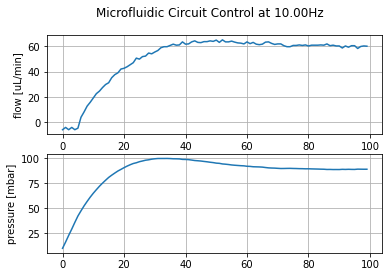
When a flow rate value is set in the Elveflow Software Interface (ESI), the pressure controller automatically adjusts the pressure to reach the requested value thanks to a customizable PID feedback loop. The piezoelectric pressure regulation enables the Elveflow’s systems to handle flows with a stability of 0.005% and a responsiveness at 10 ms. The pressure driven flow control technology is also particularly interesting to handle various volumes of liquids, from µL to L.
Applications for pressure driven flow control
Pressure-driven flow control is versatile, finding utility across various scientific disciplines such as physics, chemistry, and biology. Our website features detailed discussions on its key industrial uses, including:
- Droplet Generation: Precision control for creating uniform droplets in microfluidic experiments.
- ALGINATE BEAD GENERATION: Facilitating the production of alginate beads for encapsulation and delivery systems.
- EMULSION STABILITY STUDIES: Essential for analyzing the stability of emulsions in cosmetic, food, and pharmaceutical products.
- PERFUSION IN DYNAMIC CELL CULTURE: Providing controlled flow conditions for cell culture experiments, simulating physiological conditions.
While traditional pneumatic pumps offer cost-effectiveness and have been utilized extensively, their performance limitations in terms of response time, accuracy, and pulse control become apparent in complex setups or when precise control is essential, as often encountered in microfluidics.
The adoption of pressure-driven flow control systems is on the rise, particularly for microfluidic applications where their performance—characterized by enhanced responsiveness, stability, and reproducibility—aligns with user expectations. The integration of piezoelectric regulation technology further complements these systems, ensuring they are suited for the vast majority of microfluidic applications.
How to implement pressure driven flow control?
Pressure driven flow control proves to be one of the best pneumatic pump systems for various reasons. It allows pulseless flow with a sub-second response time. It consists in using a gas input pressure within a hermetic liquid tank, in order to flow liquid from the tank to your microfluidic device.
This technology ensures fine handling of large fluid volumes (several liters) and allowing long-term experiments. The fast responsiveness and high stability of pressure-driven flow control offer critical features compared to peristaltic pumps for several applications from droplet generation, flow focusing, flow chemistry or synthesis.
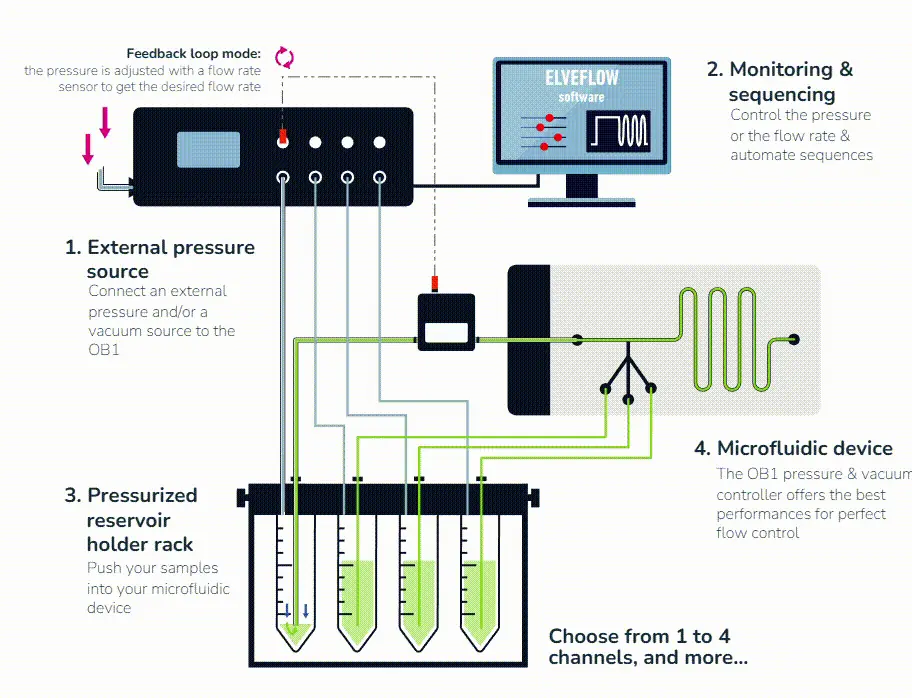 Figure 3 is a schematic representation showing the OB1 pressure controller from Elveflow. It is connected to the monitoring software, microfluidic device/chip and the sample.
To know more about the capabilities of pressure driven flow control, and how to implement it in your current setup, reach out our microfluidics experts here!
What about peristaltic pumps?
References
- Figure 1 referenced & consulted from Wikipedia – https://en.wikipedia.org/wiki/Diaphragm_pump

Microfluidics knowledge
Do you want tips on how to best set up your microfluidic experiment? Do you need inspiration or a different angle to take on your specific problem? Well, we probably have an application note just for you, feel free to check them out!
-
 note
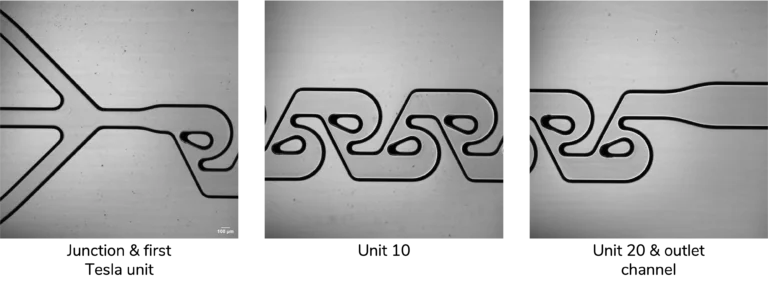
Real-Time Fluorescence Analysis of Mixing in a Tesla Micromixer
Real-Time Fluorescence Analysis of Mixing in a Tesla Micromixer
 note
Mechanoactivation of Single Stem Cells in Microgels Using a 3D-Printed Stimulation Device
A microfluidic and pressure-driven platform enabling reproducible mechanoactivation of individually encapsulated stem cells under live-cell imaging in a true 3D environment.
 note
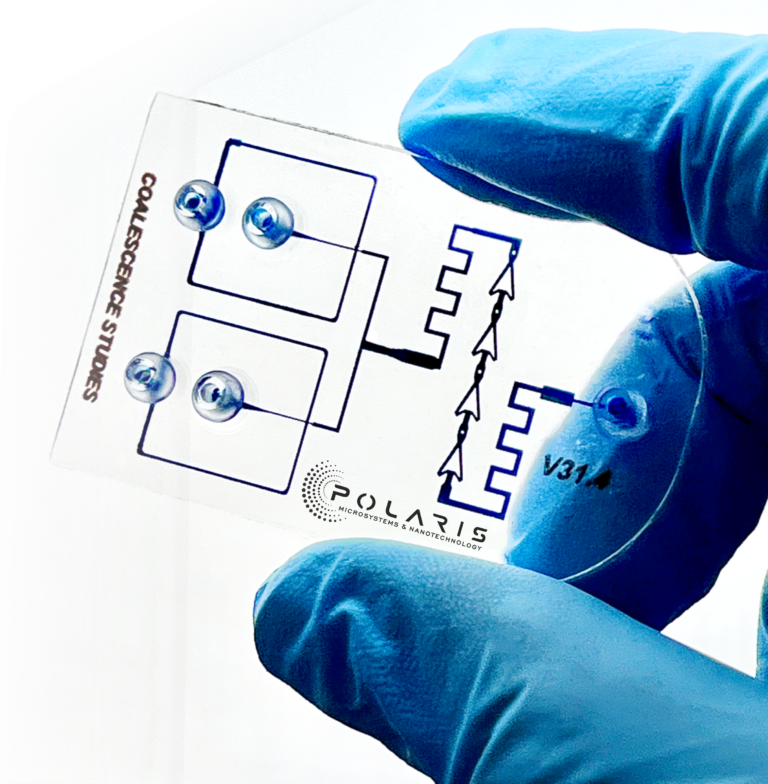
High-Resolution Microfluidic Device for Precise Oil-in-Water Emulsion and Coalescence Analysis
Discover a high-resolution microfluidic device designed for precise oil-in-water emulsion studies and coalescence analysis. Learn how Elveflow's advanced flow control enhances petroleum research and beyond.
 note
Water-In-Oil Droplet Generation under Microscopy Monitoring
Discover a simple and intuitive microfluidic water-in-oil droplet protocol under microscope monitoring
-
 note
Direct-Ink-Writing Flow Control with Elveflow Pressure Sensor
This application note demonstrates a smart use ouf Elveflow's Pressure sensor and sensor reader for Direct-Ink-Writing flow control.
 note
Elveflow SDK Tutorial Part 1: Setting Up Your Environment on the OB1
Learn how to set up your development environment for Elveflow products with this comprehensive tutorial.
 note
Utilizing a high precision microfluidic dead-end filtration setup to achieve global alignment of single walled carbon nanotubes
Single-wall carbon nanotubes (SWCNTs) are considered as quasi 1-dimensional (1D) carbon nanostructures, which are known for their outstanding anisotropic electronic, mechanical, thermal and optical properties.
-
 note
How do you synchronize a microscope with a microfluidic perfusion system?
This application note describes how to combine and synchronise liquid perfusion and imaging using an Olympus spinning disc confocal microscope together with an Elveflow pressure-driven flow controlled microfluidic system.
 note
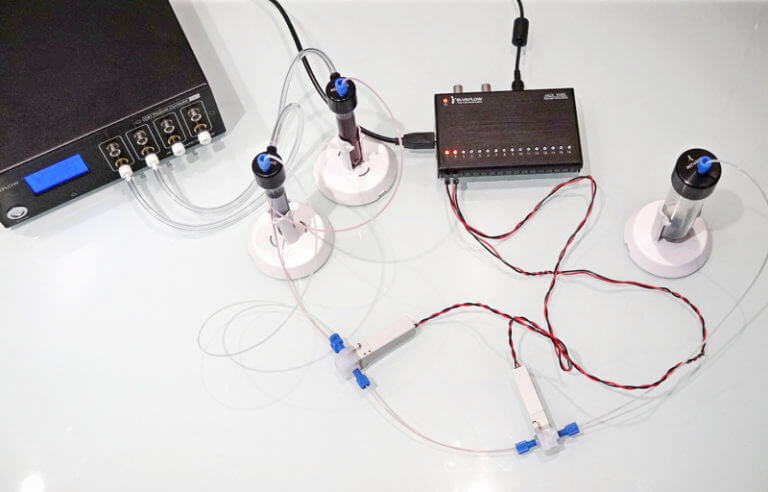
REDIRECTING FLOW WITH A MICROFLUIDIC VALVE CONTROLLER
The MUX Wire enables you to host up & control many valves of your choice. It gives you a total freedom to add up to 16 valves and put them anywhere in your set-up and control them independently and simultaneously.
 note
Active Micromixers-on-a-Chip
Mixing is a crucial step for several microfluidic applications like chemical synthesis, clinical diagnostics, sequencing and synthesis of nucleic acids
 note
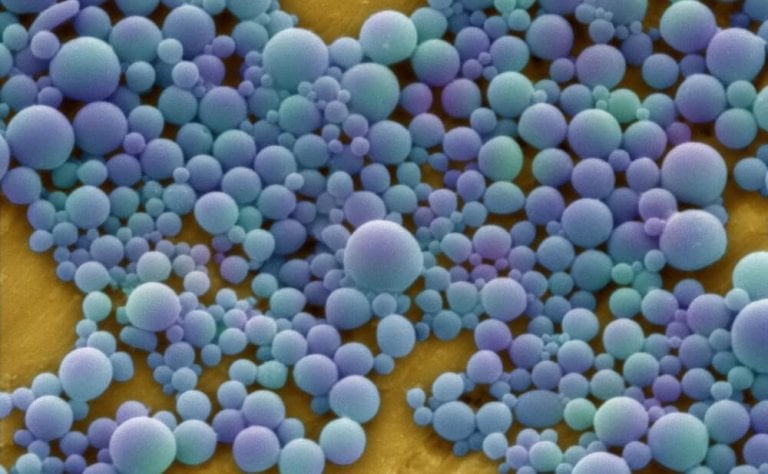
Nanoparticle generator
This application note describes how microfluidic can be employed as a nanoparticle generator based on the example of PLGA bead generation.
-
 note
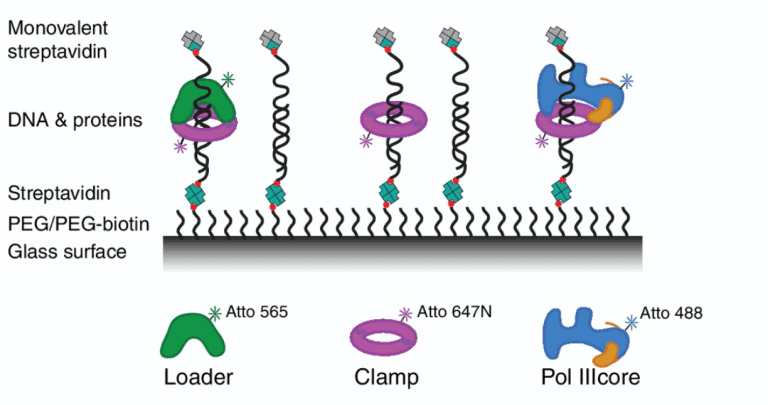
Microfluidic colocalization set-up for DNA analysis
This user guide will show you how to run microfluidic colocalization studies of single molecule spectroscopy.
 note
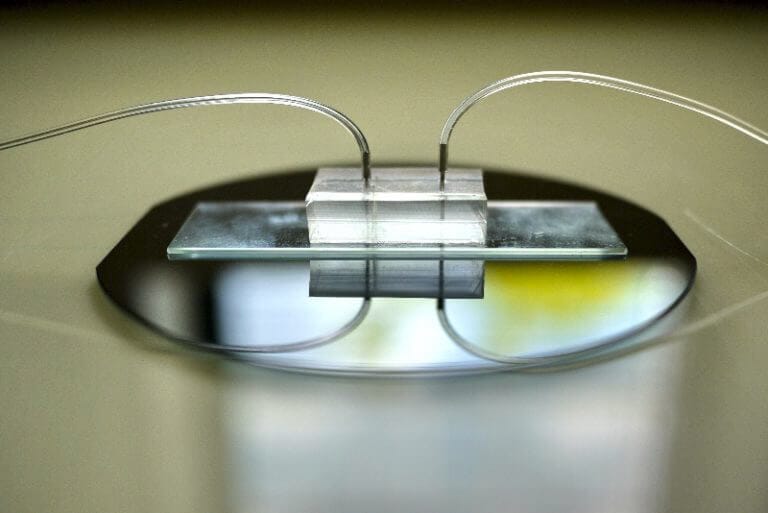
Fluid handling
Microfluidics is the science of handling small amounts of liquids, inside micrometer scale channels. Discover how to handle fluids for your microfluidic experiments.
-
note
Real-Time Fluorescence Analysis of Mixing in a Tesla Micromixer
Real-Time Fluorescence Analysis of Mixing in a Tesla Micromixer
note
Mechanoactivation of Single Stem Cells in Microgels Using a 3D-Printed Stimulation Device
A microfluidic and pressure-driven platform enabling reproducible mechanoactivation of individually encapsulated stem cells under live-cell imaging in a true 3D environment.
-
note
High-Resolution Microfluidic Device for Precise Oil-in-Water Emulsion and Coalescence Analysis
Discover a high-resolution microfluidic device designed for precise oil-in-water emulsion studies and coalescence analysis. Learn how Elveflow's advanced flow control enhances petroleum research and beyond.
note
Water-In-Oil Droplet Generation under Microscopy Monitoring
Discover a simple and intuitive microfluidic water-in-oil droplet protocol under microscope monitoring
-
note
Direct-Ink-Writing Flow Control with Elveflow Pressure Sensor
This application note demonstrates a smart use ouf Elveflow's Pressure sensor and sensor reader for Direct-Ink-Writing flow control.
-
note
Elveflow SDK Tutorial Part 1: Setting Up Your Environment on the OB1
Learn how to set up your development environment for Elveflow products with this comprehensive tutorial.
note
Utilizing a high precision microfluidic dead-end filtration setup to achieve global alignment of single walled carbon nanotubes
Single-wall carbon nanotubes (SWCNTs) are considered as quasi 1-dimensional (1D) carbon nanostructures, which are known for their outstanding anisotropic electronic, mechanical, thermal and optical properties.
-
note
How do you synchronize a microscope with a microfluidic perfusion system?
This application note describes how to combine and synchronise liquid perfusion and imaging using an Olympus spinning disc confocal microscope together with an Elveflow pressure-driven flow controlled microfluidic system.
note
REDIRECTING FLOW WITH A MICROFLUIDIC VALVE CONTROLLER
The MUX Wire enables you to host up & control many valves of your choice. It gives you a total freedom to add up to 16 valves and put them anywhere in your set-up and control them independently and simultaneously.
-
note
Active Micromixers-on-a-Chip
Mixing is a crucial step for several microfluidic applications like chemical synthesis, clinical diagnostics, sequencing and synthesis of nucleic acids
note
Nanoparticle generator
This application note describes how microfluidic can be employed as a nanoparticle generator based on the example of PLGA bead generation.
-
note
Microfluidic colocalization set-up for DNA analysis
This user guide will show you how to run microfluidic colocalization studies of single molecule spectroscopy.
note
Fluid handling
Microfluidics is the science of handling small amounts of liquids, inside micrometer scale channels. Discover how to handle fluids for your microfluidic experiments.
-
 note
How to choose flow regulation parameters?
Flow regulation is a compulsory operation in most of the microfluidics operations. In some applications such as 2D or 3D cell culture, flow regulation is essential since accurate micro-environmental parameters control is required. Elveflow do it’s best to make this operation as easy as possible to help you to focus on what really matter in your setup.
-
note
Real-Time Fluorescence Analysis of Mixing in a Tesla Micromixer
Real-Time Fluorescence Analysis of Mixing in a Tesla Micromixer
-
note
Mechanoactivation of Single Stem Cells in Microgels Using a 3D-Printed Stimulation Device
A microfluidic and pressure-driven platform enabling reproducible mechanoactivation of individually encapsulated stem cells under live-cell imaging in a true 3D environment.
-
note
High-Resolution Microfluidic Device for Precise Oil-in-Water Emulsion and Coalescence Analysis
Discover a high-resolution microfluidic device designed for precise oil-in-water emulsion studies and coalescence analysis. Learn how Elveflow's advanced flow control enhances petroleum research and beyond.
-
note
Water-In-Oil Droplet Generation under Microscopy Monitoring
Discover a simple and intuitive microfluidic water-in-oil droplet protocol under microscope monitoring
-
note
Direct-Ink-Writing Flow Control with Elveflow Pressure Sensor
This application note demonstrates a smart use ouf Elveflow's Pressure sensor and sensor reader for Direct-Ink-Writing flow control.
-
note
Elveflow SDK Tutorial Part 1: Setting Up Your Environment on the OB1
Learn how to set up your development environment for Elveflow products with this comprehensive tutorial.
-
note
Utilizing a high precision microfluidic dead-end filtration setup to achieve global alignment of single walled carbon nanotubes
Single-wall carbon nanotubes (SWCNTs) are considered as quasi 1-dimensional (1D) carbon nanostructures, which are known for their outstanding anisotropic electronic, mechanical, thermal and optical properties.
-
note
How do you synchronize a microscope with a microfluidic perfusion system?
This application note describes how to combine and synchronise liquid perfusion and imaging using an Olympus spinning disc confocal microscope together with an Elveflow pressure-driven flow controlled microfluidic system.
-
note
REDIRECTING FLOW WITH A MICROFLUIDIC VALVE CONTROLLER
The MUX Wire enables you to host up & control many valves of your choice. It gives you a total freedom to add up to 16 valves and put them anywhere in your set-up and control them independently and simultaneously.
-
note
Active Micromixers-on-a-Chip
Mixing is a crucial step for several microfluidic applications like chemical synthesis, clinical diagnostics, sequencing and synthesis of nucleic acids
-
note
Nanoparticle generator
This application note describes how microfluidic can be employed as a nanoparticle generator based on the example of PLGA bead generation.
-
note
Microfluidic colocalization set-up for DNA analysis
This user guide will show you how to run microfluidic colocalization studies of single molecule spectroscopy.
-
note
Fluid handling
Microfluidics is the science of handling small amounts of liquids, inside micrometer scale channels. Discover how to handle fluids for your microfluidic experiments.
-
note
How to choose flow regulation parameters?
Flow regulation is a compulsory operation in most of the microfluidics operations. In some applications such as 2D or 3D cell culture, flow regulation is essential since accurate micro-environmental parameters control is required. Elveflow do it’s best to make this operation as easy as possible to help you to focus on what really matter in your setup.

 Job
 Collaborations
 Customer
 Other