Peristaltic pumps vs. pressure driven flow control
At a glance
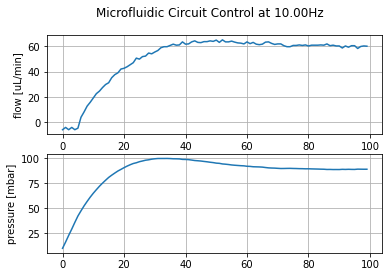
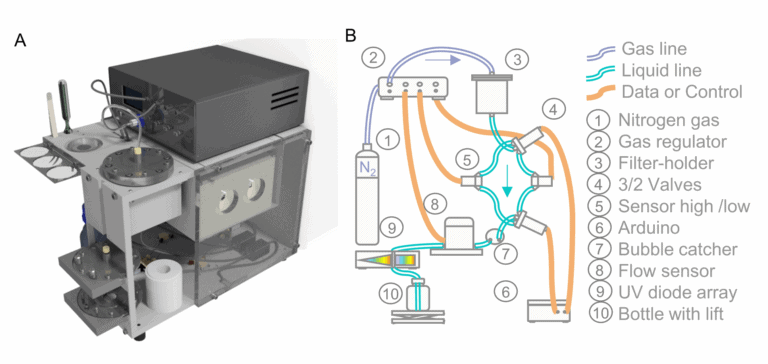
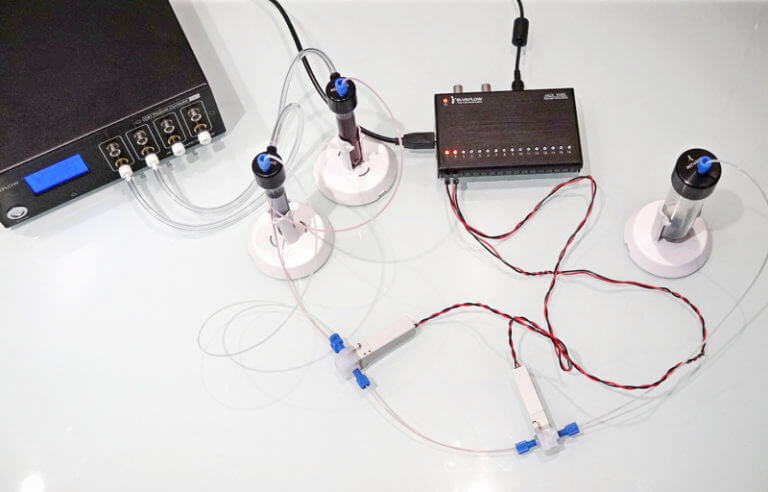
This application note explains why researchers have been switching from peristaltic pumps to pressure-driven flow control for liquid handling in microfluidics. In a peristaltic pump, back pressure lowers the flow rate, whereas pressure-driven control pressurizes a reservoir so that gas pushes the liquid toward the chip. Peristaltic pumps are convenient and can re-inject the same sample, while pressure control is mainly used when high responsiveness, stability and precision are required.
- Main advantage
- Peristaltic pump: interchangeable flexible tubes, same sample can be re-injected; fitted for large flow rates
- Limitations
- Peristaltic pump: less long-term stability, recurrent flow rate calibration, pulses at low flow rates
- When to use
- Pressure control: high flow responsiveness and stability, dead-end channels, large sample volumes











 Job
 Collaborations
 Customer
 Other