Dimensional changes of photolithographic mask caused by fluctuations in Humidity
Material CRH in mm/m % (humidity expansions of different materials)
Glass photo-masks 0, Polyester 8, Gelatine Approx. 100
Polyester film absorbs water and thus expands with increasing relative humidity. The expansion is determined by the CRH ( relative humidity expansion coefficient). CRH is expressed in µm per metre per % change in relative humidity. If the CRH of a material is 1, one metre of that material will expand 1µm when the relative humidity increases by 1 %. Likewise the material will shrink as the relative humidity decreases.
Silver halide film masks react in a more complex way to changes in relative humidity. The dimensional change is partly caused by the influence of the gelatines and partly by the influence of the polyester. Remember, humidity only affects our polyester film masks, and not our glass based masks.
The gelatines on the film base have a time period for relative humidity changes of only tenths of a second: they act like a sponge.They absorb and desorb much water and do so extremely fast. However, the polyester base has a time period for relative humidity changes of several hours: it absorbs or desorbs only a little water and does so very slowly.
Please note: Humidity distribution in a room is rarely homogenous – that is, it can change from area to area, and from corner to corner. It is vital if you are trying to control the humidity environment to ensure that air flow is constant throughout the WHOLE room.
Dimensional changes of photolithographic mask caused by mechanical tensions
Any film mask will expand to a certain extent under the influence of mechanical tension.
The expansion is determined by the elasticity modulus, which is typical of the material. If the tension does not exceed a certain value, all changes will be reversible. In general, if the photolithographic mask is subjected to only limited mechanical tensions, no irreversible dimensional changes will occur.
However, photolithographic masks do suffer from mechanical tensions induced by some contact exposure equipment and the vacuum applied in the printer. The dimensional changes will be limited when the vacuum is gently built up all over the surface of the photolithographic mask. When a film is secured by a very strong vacuum, that vacuum may hold the film, preventing it from changing size in response to changes in temperature or humidity. Although the temperature of the film changes, the size should remain constant for as long as the vacuum is applied. Once the vacuum is released, the film size will change instantly.
Dimensional changes of photolithographic mask due to aging
The size of silver halide masks may change with aging. Over time, there is a tendency for the film to change back to the initial size it was prior to processing. These changes can take several months, and are relatively small, but this gives another reason why it is critical to control and maintain processing conditions.
Microfabrication
Station
To fabricate easily your PDMS microfluidic chips
Discover
Irreversible dimensional changes of photolithographic masks
Hysteresis is a phenomenon where irreversible dimensional changes occur with film photolithographic masks when the relative humidity has been below 30% or above 70%. At higher relative humidities, irreversible dimensional changes occur due to recovery. At lower relative humidities, irreversible dimensional changes occur due to relaxation.
When a film is brought into an environment with a RH higher than 70%, the gelatines become so wet that they loose strength. One could say that the gelatines chains are separated by so much water that they loose contact with each other and cannot apply their influence any longer. The effect of the gelatines on the dimensional changes becomes weaker, and as a result the film expands less. This loss of length increase is permanent. Even when the RH of the environment will later return to below 70%, the film will remain shorter. This phenomenon is called recovery.
When a film enters an environment with less than 30% RH, the gelatines loose so much water by evaporation that the gelatine chains touch one another. Hydrogen bridges are formed between the gelatine chains and these absorb the mechanical tensions the gelatines would otherwise apply to the polyester.
As a result, the effect of the gelatines on the dimensional change weakens, and the film shrinks less. This loss of shrinkage remains, even if the RH of the environment rises above 30% again. This phenomenon is called relaxation. There is little worry with irreversible changes based on temperature. At temperatures above 60°C the polyester starts to deform. These deformations are permanent and very obvious!
Acclimatisation of photolithographic mask before use
As long as the film is then used in the very same conditions in a production environment, there will be no problems with dimensional changes due to fluctuations in temperature and/or humidity. To maintain accuracy, we also store and image our glass photo-masks in a controlled environment.
Approximately 50% of the dimensional change of a silver halide mask due to fluctuations in relative humidity happens within a second. This is due to the gelatines. The remaining 50 % of the total dimensional changes take litterally hours and hours. That’s why we recommend waiting for eight hours for a film to be acclimatized after a change in relative humidity. This timing is only valid when the film is exposed to the environment from both sides. Coincidentally, polyester film only takes a few minutes to equilibrate with changes in temperature.
Best practices to get the better photolithography of your microfluidic mold
Prior to using the film in a mask aligner (or similar equipment), it should be acclimatised for 8 hours in an environment of 21°C and 50% (the standard conditions that are also applied in imaging). During that time, the film can get at the right conditions without any humidity exchange. Then when the film has fully acclimatized, it may be used without any dimensional inaccuracies.
Main Points
A film photolithographic mask adapts to changes in temperature within a few minutes, but changes to humidity within a few hours
Humidity of <30% or >70% will cause irreversible changes on a film photolithographic mask
Temperatures of < -20 deg C and > 60 deg C will cause damages to a film photolithographic mask
Always acclimatise film photolithographic mask in 21 deg C / 50% humidity for 8 hours before using them
A Soda Lime photolithographic mask will NOT change with humidity
A Soda Lime photolithographic mask is 2x more stable than a film photo-mask
A Quartz photolithographic mask will not move with neither temperature NOR humidity
PDMS chips, soft lithography … Do it yourself !
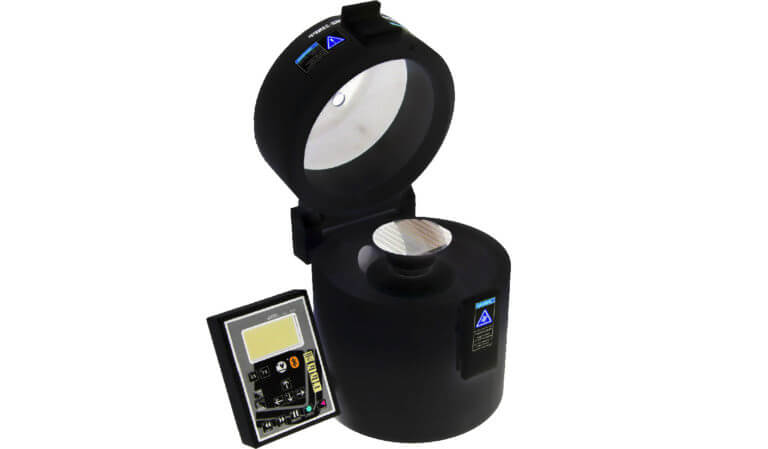
More information about the SoftLithoBox®




 Job
 Collaborations
 Customer
 Other